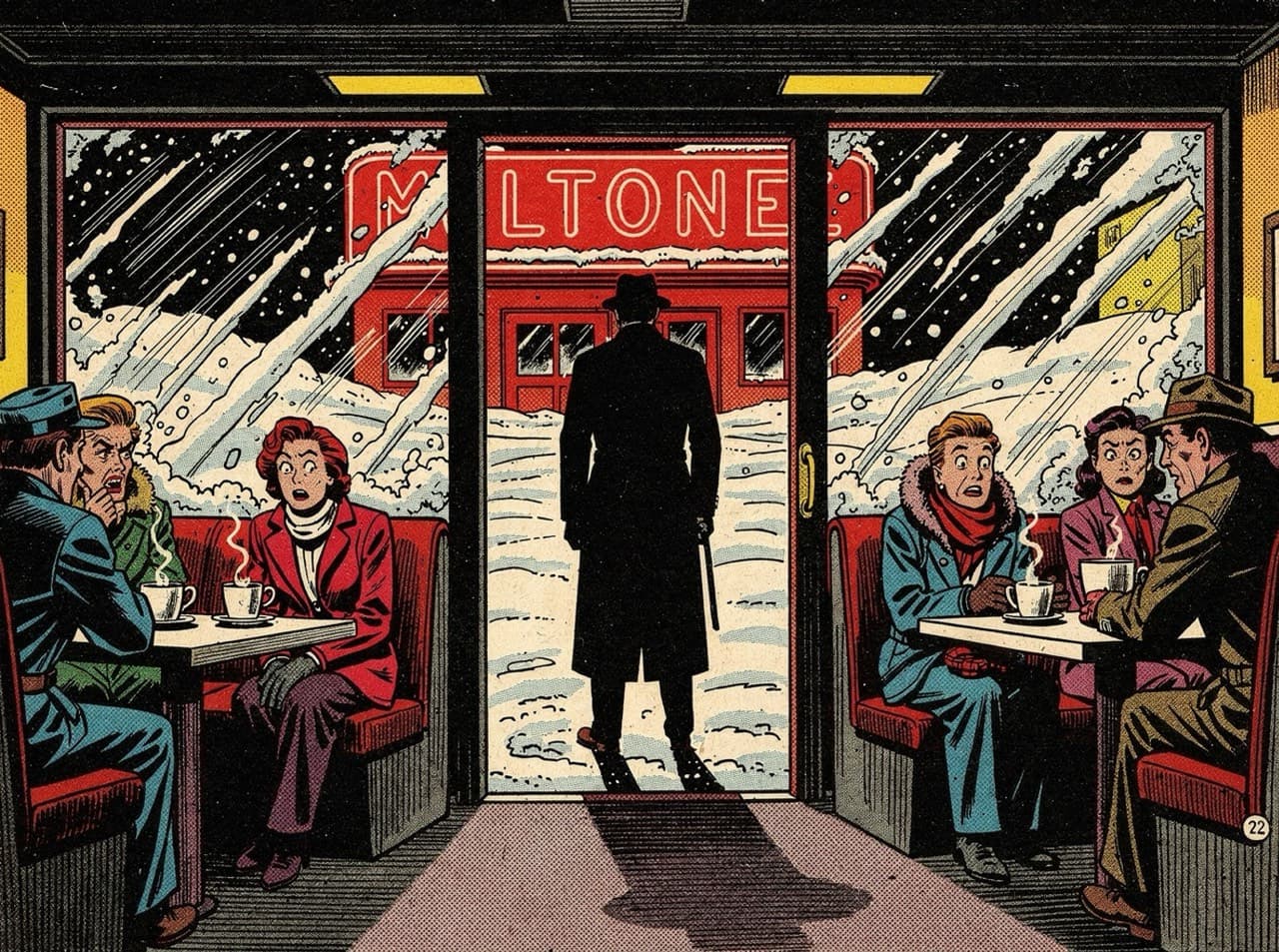
Readers forgive a lot in a comic. A wobbly background, a stiff hand, a panel that's a little too dark. What they notice at once is a character who stops looking like themselves: the scar on the other cheek, the coat that was green two pages ago, the hair that's suddenly straight.
Artists call staying the same "on-model", and they keep it with one page: the model sheet. Here's what goes on one, which details matter, and how to keep a character the same from the first panel to issue twenty.
What a model sheet is
A model sheet is the page an artist draws a character from instead of from memory. A studio draws it once, carefully: the character from the front, at three-quarters, from the side and from the back, with notes on what never changes. Everyone who draws the character after that draws from the sheet.
It isn't about drawing well. It's about deciding, once, what this person looks like, so nobody has to guess again on page nine.
Pick the few details that must not change
Readers don't recognise a character by their nose. They recognise two or three things, and they notice the moment one goes missing. Choose them before anything is drawn:
- The shape. The hair, a hat, how tall they stand next to the others. You should know them in silhouette.
- One colour that's theirs. A red cape, a yellow raincoat, a green scarf.
- One mark. Glasses on a chain, a scar through an eyebrow, a missing tooth, one ear that won't stand up.
Write them down in one sentence. Everything else is allowed to change.
What changes, and what doesn't
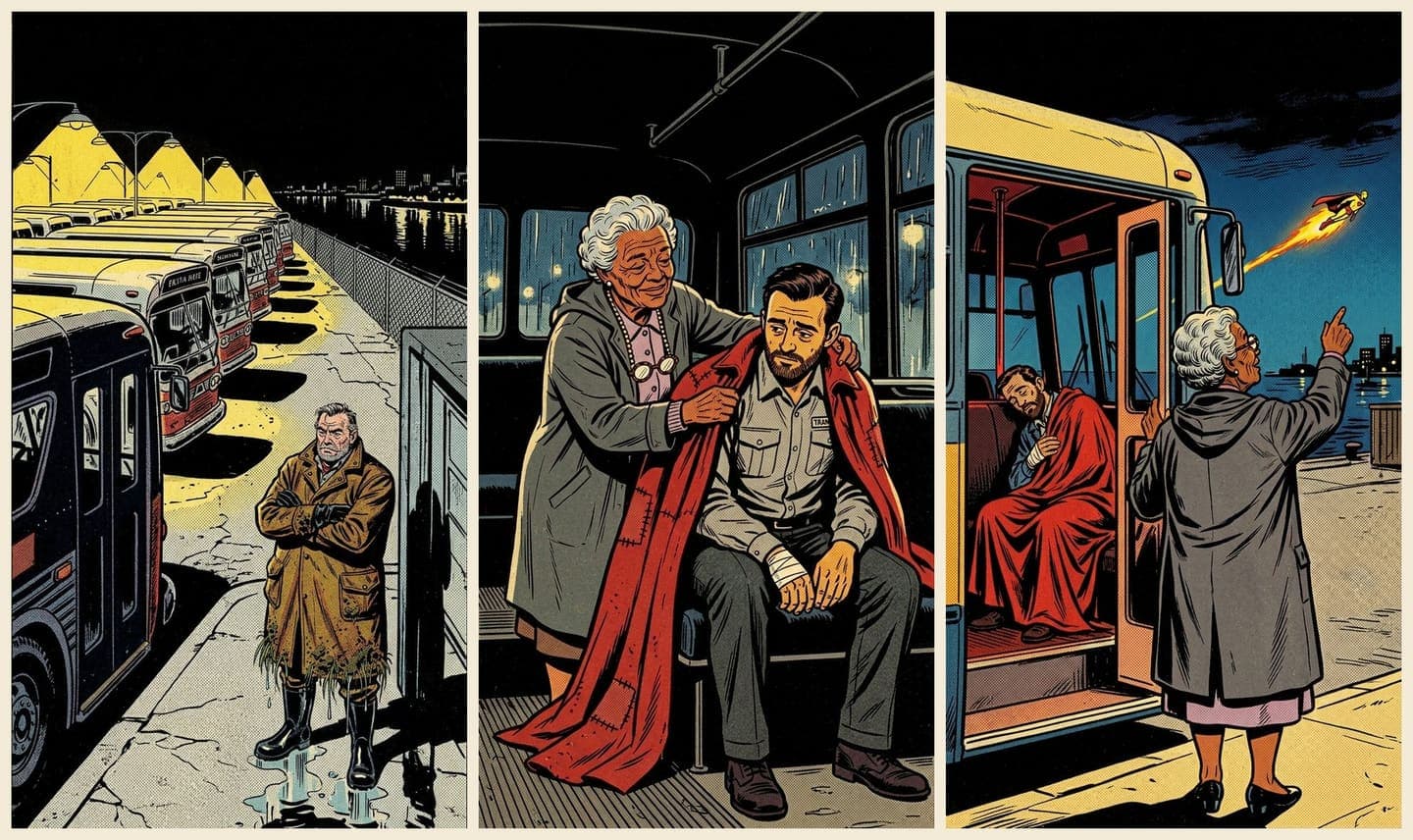
Our own comic, Wash & Fold, shows how it works. Dot runs an all-night laundromat. Her details: silver curls, round glasses on a beaded chain, and the patched red cape that keeps turning up in a customer's washing.
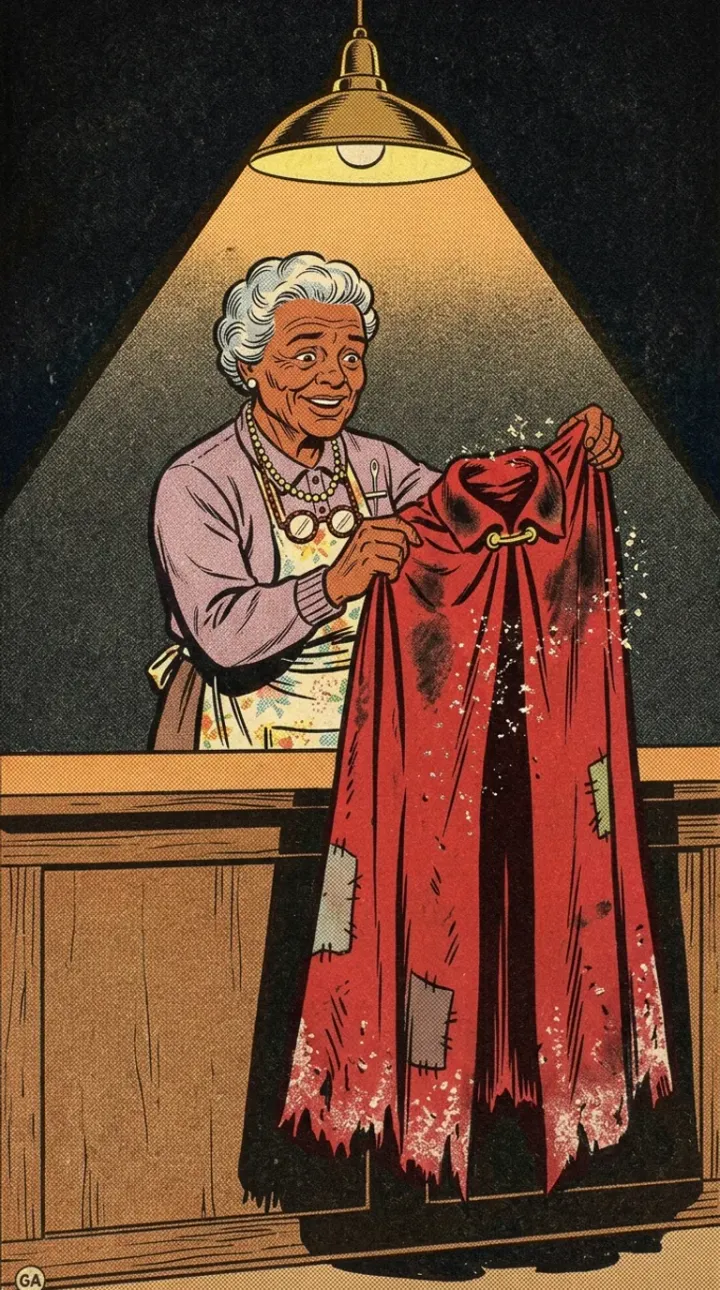
In issue 2 she's at the payphone on the laundromat wall, the cape folded on the counter. In issue 3 she's out on a night bus in a grey raincoat, and she's still Dot at a glance: the curls, the glasses and the chain came with her, and the cape is still red and patched.
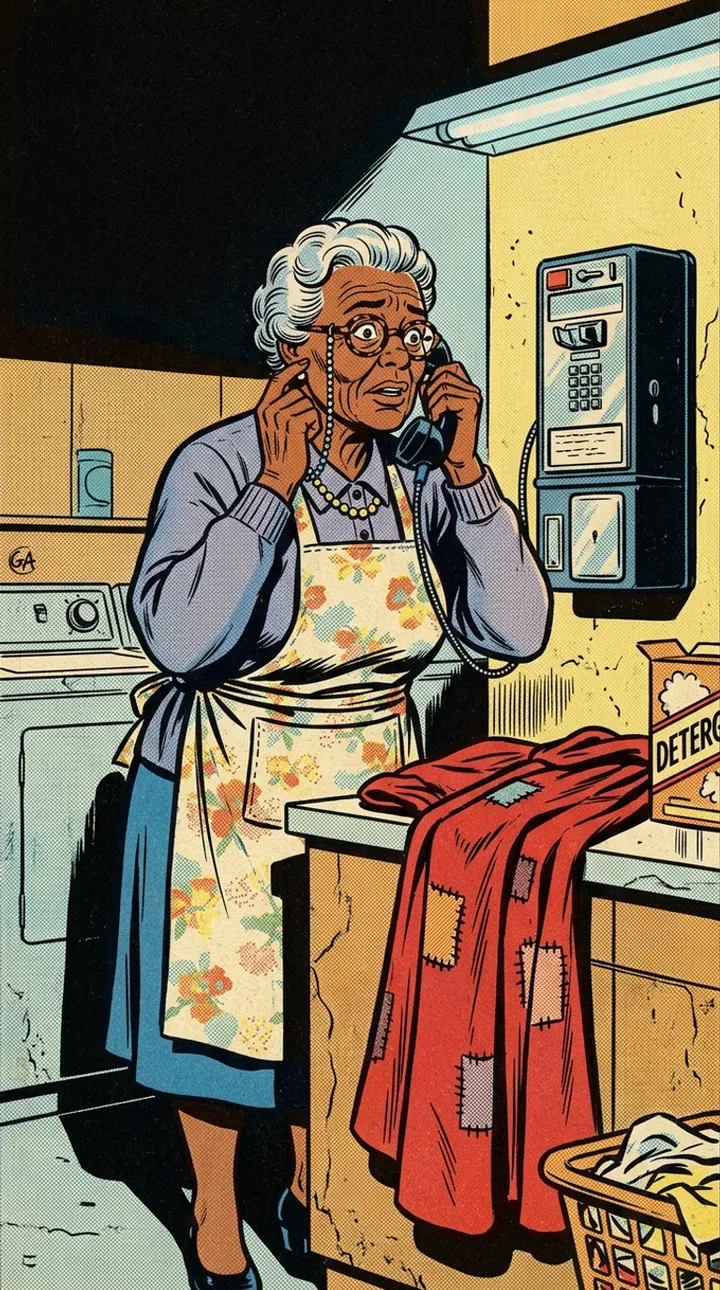
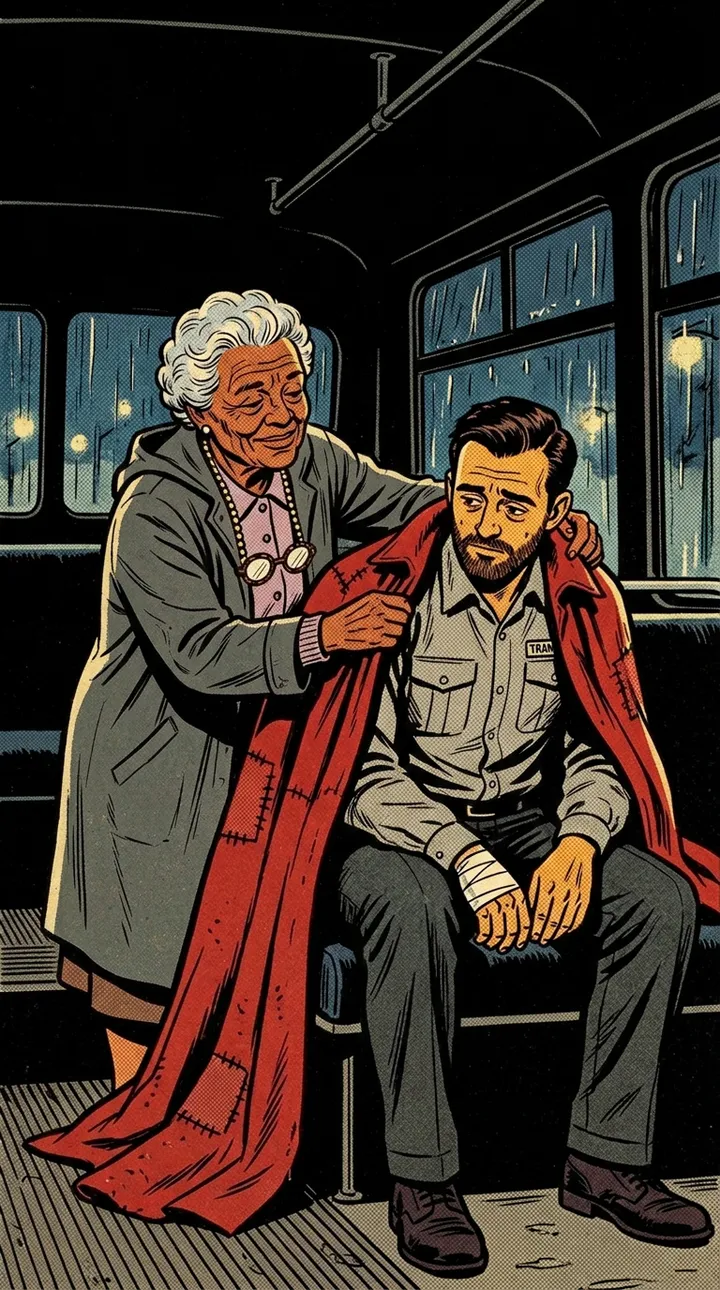
Clothes change with the weather and the story. The details don't. When a character changes on purpose, put it in the script ("in her grey raincoat"), so the change is a choice and not a drift.
How Panel & Ink keeps the sheet
Every regular in a Panel & Ink comic gets a model sheet on the "Who's in your comic?" step of the new-comic flow.
Start from a photo or from words. Add a photo, confirm it's yours to use, and the studio writes a description from it: age and build, skin and hair, face marks, two or three garments with their colours, one signature prop. Edit anything it got wrong, or write the description yourself with no photo at all. This is where your few details go.
Draw the sheet in your look. "Draw it" makes one drawing in the look you picked, and "draw from photo" draws it from the photo. If it isn't them yet, "draw again" asks how the next one should differ: a red jacket, shorter hair, no sunglasses. Leave the question mark and the studio draws them when the comic is made.
Every panel draws from it. Each panel a regular appears in is drawn from their sheet, and the writer puts their description into that panel's drawing directions, word for word. The picture keeps the face; the words keep the details.
Later, the comic's Cast tab can draw new takes of a sheet; pick a different one and every panel drawn after follows it. It can also draw the classic turnaround, front, three-quarter view, side and back, for you to check panels against.
Places and things need sheets too
A character isn't the only thing a reader expects to come back the same. The laundromat has its counter and its payphone; the cape has its patches. On the board, every recurring place gets a description, and the writer uses it whenever a panel happens there. The things that keep turning up, a prop, a vehicle, a letter, get one too, and the writer describes them the same way every time they appear.
Check it twice
You read the script before a single panel is drawn, so check the names there. When the panels come in, look at each regular against their sheet. Where someone has drifted, ask for another take with a note on what to change: "glasses on the chain, not on her face".
Where it matters most
Anything with a recurring cast. The birthday comic puts your kid in every panel, drawn from their photo. A comic about your dog or cat lives on that one floppy ear, and how to turn your dog or cat into a comic character covers the photo that works best. A webcomic needs the same faces in issue forty as in issue one; how to start a webcomic you'll still be making in a year says why its cast should stay small.
Wash & Fold is drawn in Silver-Age Halftone, the look of the old superhero books.
What it costs
An issue on a standard look runs about 20 credits. A new account starts with 35 credits, enough for your first issue on a standard look, and they last 14 days.
Make your first issue: pick the details, and let every panel keep them.