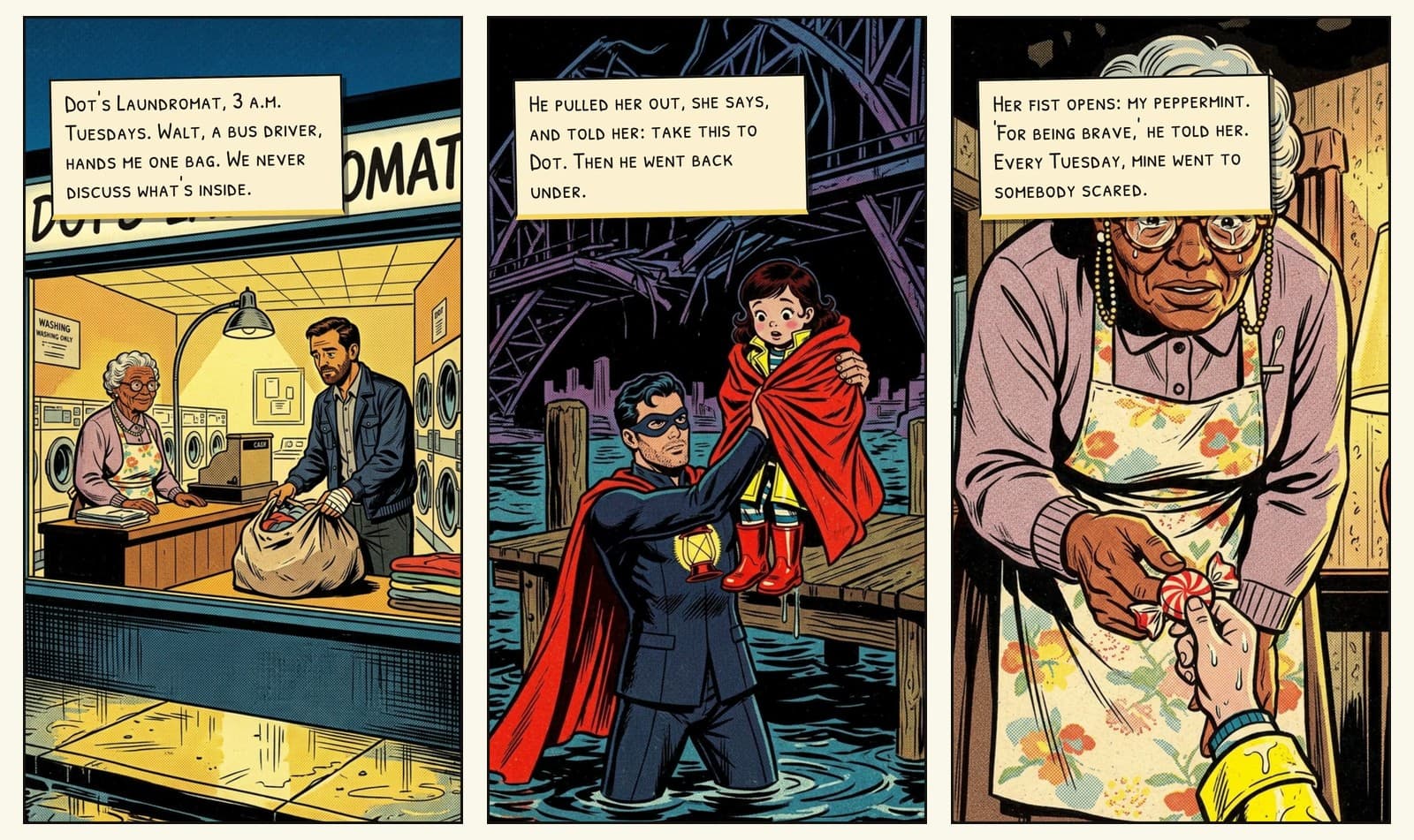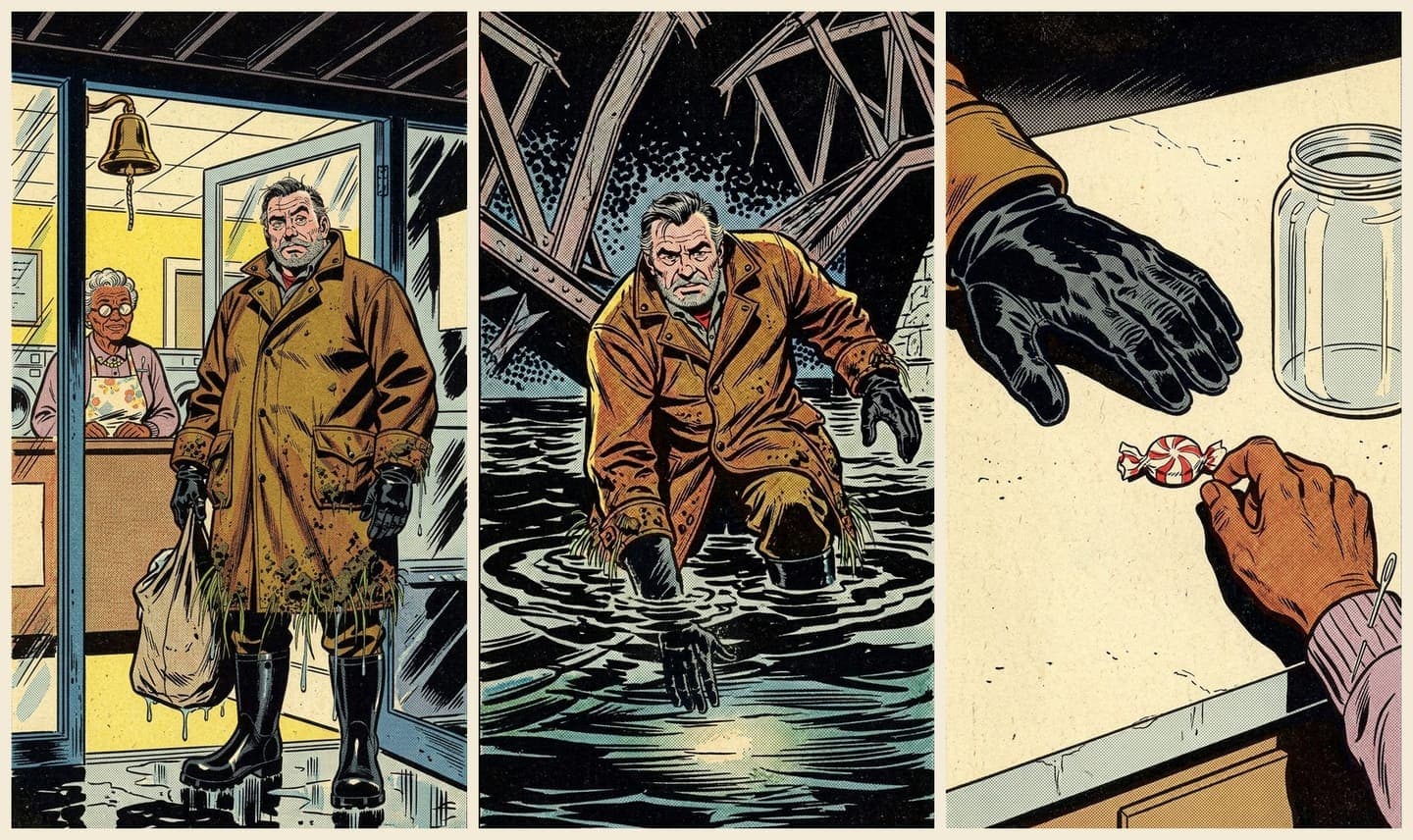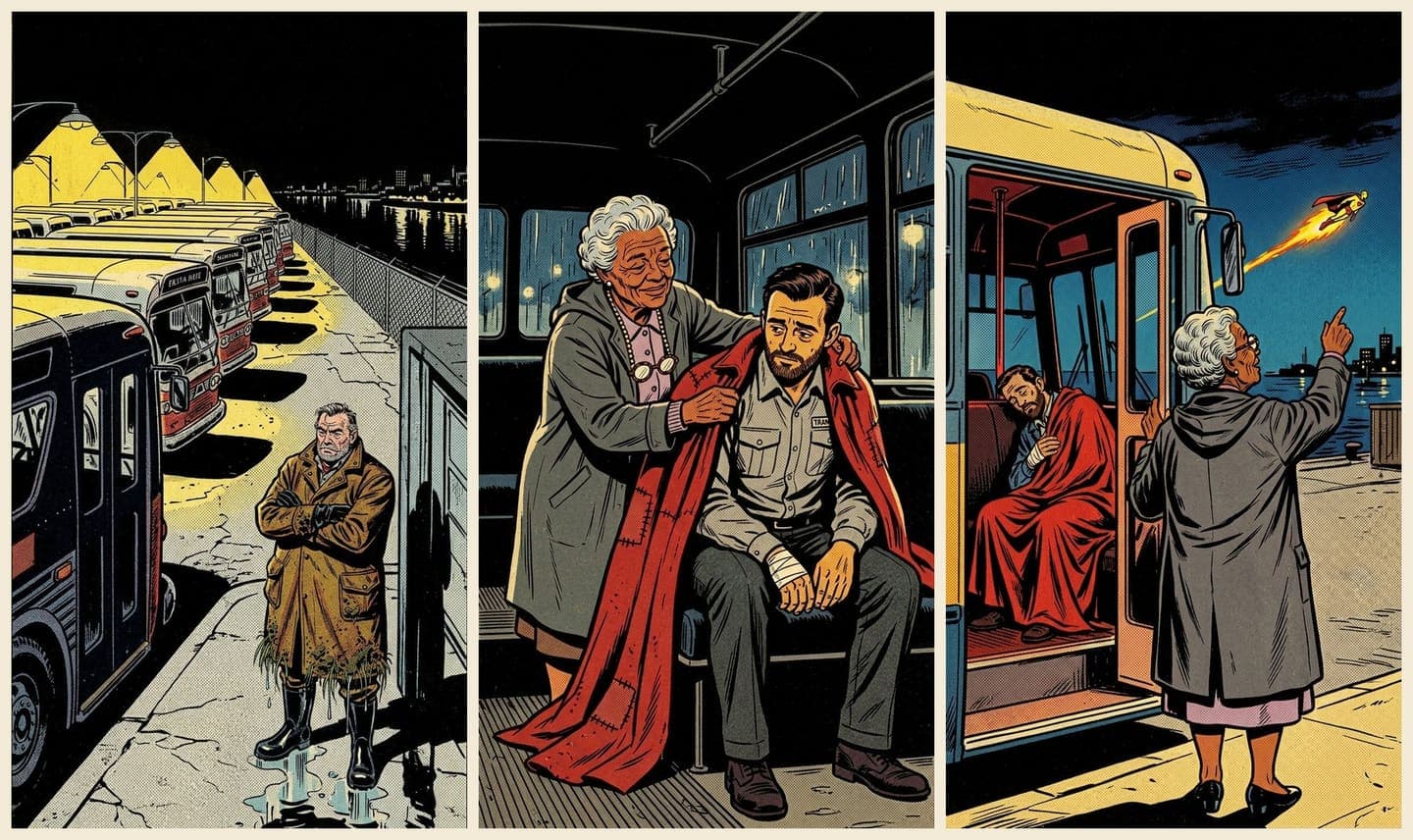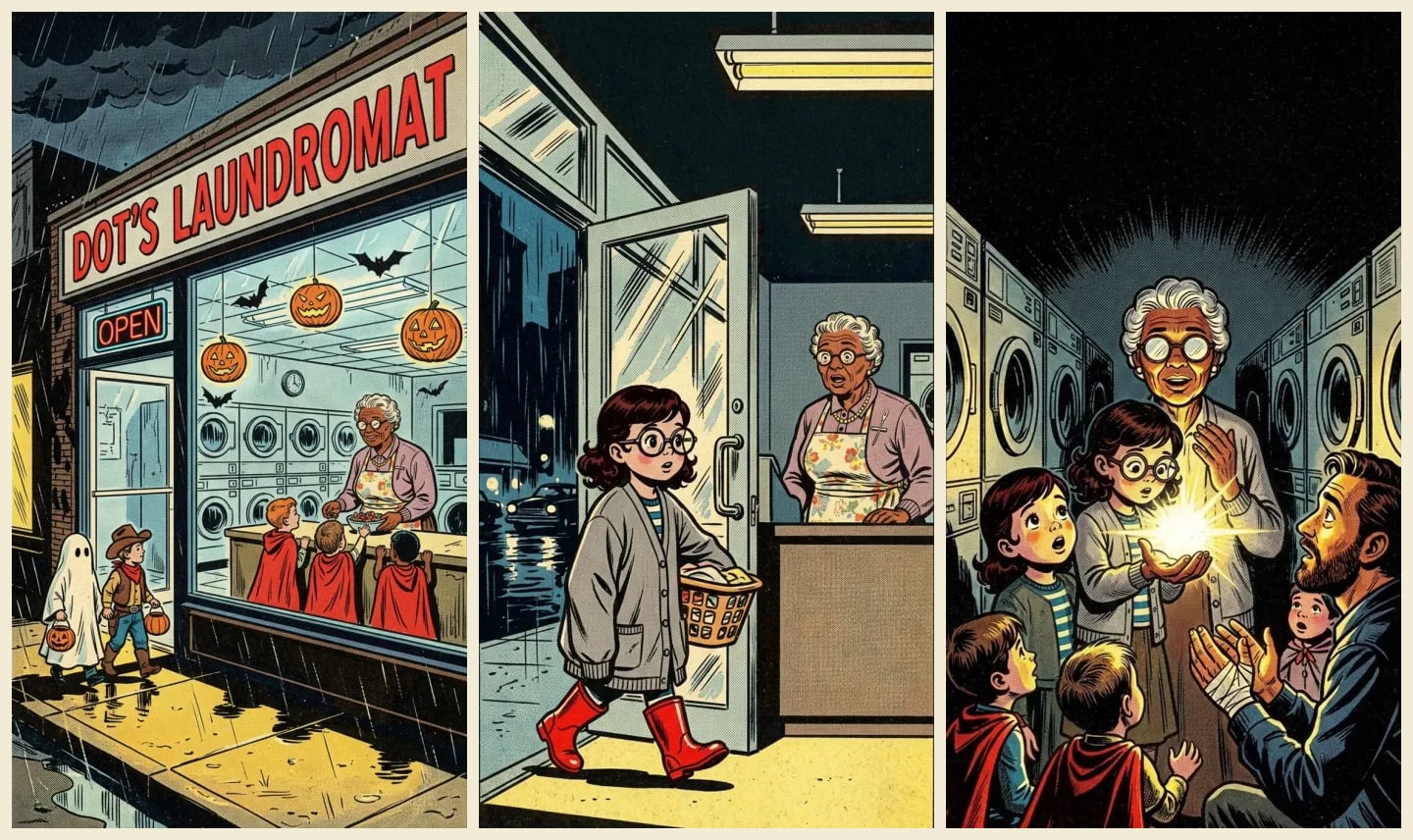
Issue 3 ended on the back seat of a parked bus: Walt asleep in the red cape, his light nearly out, and someone else in a cape crossing the sky over the harbor. Issue 4 is the Halloween special, the one night of the year a red cape in a laundromat is nothing to remark on. It's also the first issue where the studio kept every word of our script, which after issue 3 is news.
The idea
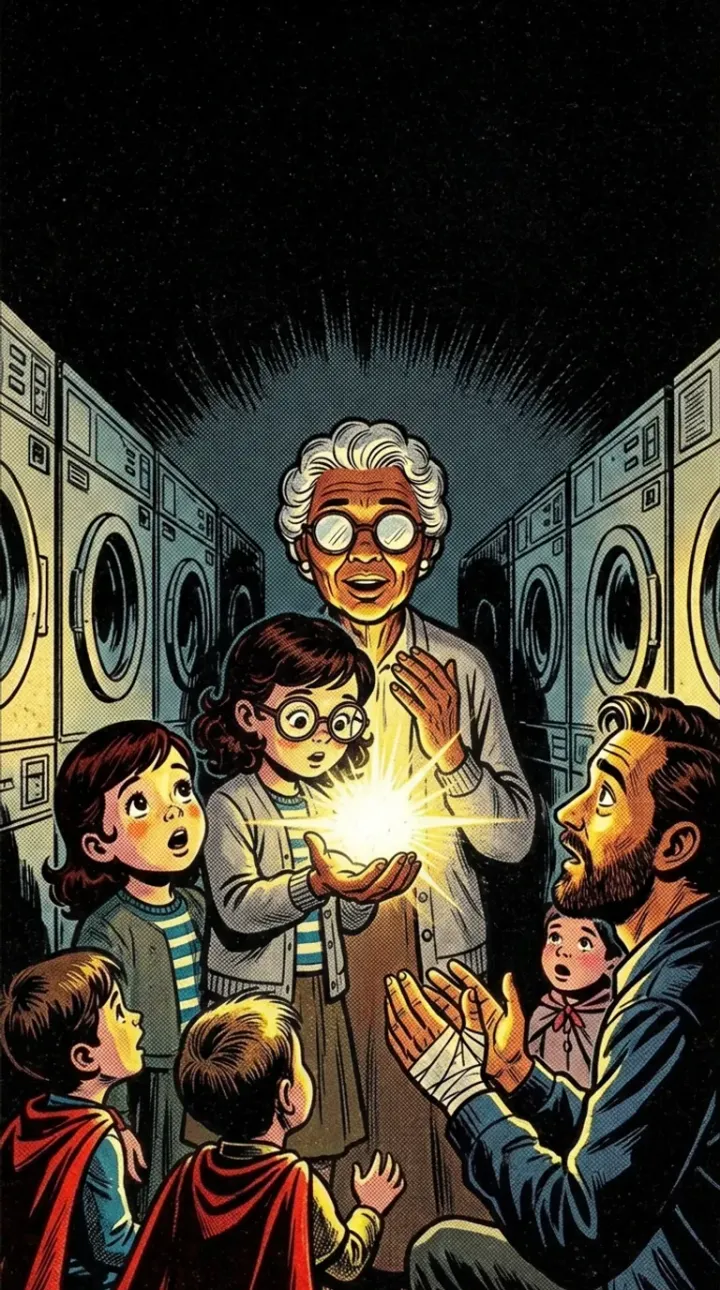
Issues 2 and 3 left a question open: where did Walt's light go? In issue 2 it sank away under the river. In issue 3 it flickered in his palm like a dying bulb. Issue 4 answers it. On Halloween night, with half the city in red capes, the power goes out, and the light comes up in the hand of the girl he pulled from the river.
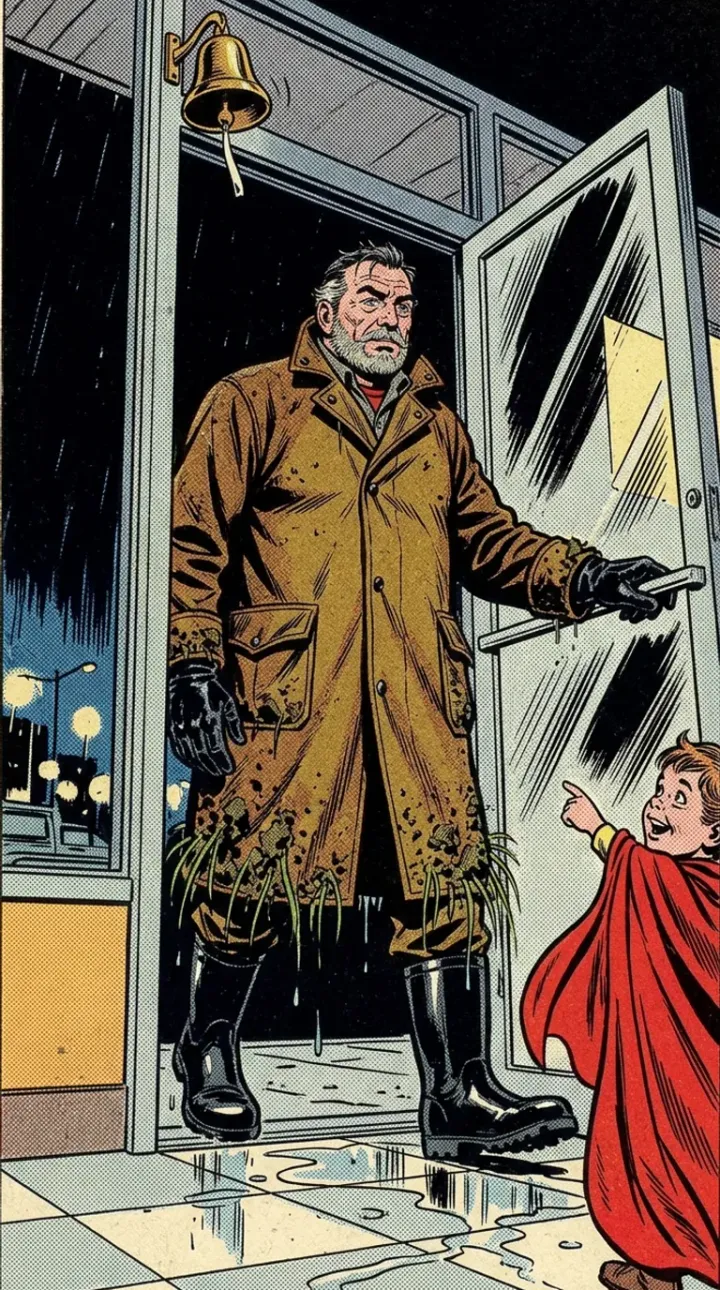
Two things it doesn't do, because the test reads of the earlier issues said not to: there's no fourth peppermint, and no new hero. And Silt, the river man the whole city blames, gets cheered for the first time in his life, by a small kid in a red bedsheet cape.
The idea cost nothing this time. The comic's desk has a box for adding an idea by hand, which keeps your words exactly as you typed them. For issues 2 and 3 we paid a credit to have an idea written, then rewrote it.
The script
We wrote the issue straight into that box as eight panels, a picture and a caption for each, every caption inside the eighteen words a caption gets. In issue 3 the writer took the same kind of list, cut a panel and dropped our best beat, and we spent the storyboard putting it back. Since then, a brief laid out panel by panel is read as a script. The writer kept all eight captions word for word, and there was nothing to put back.
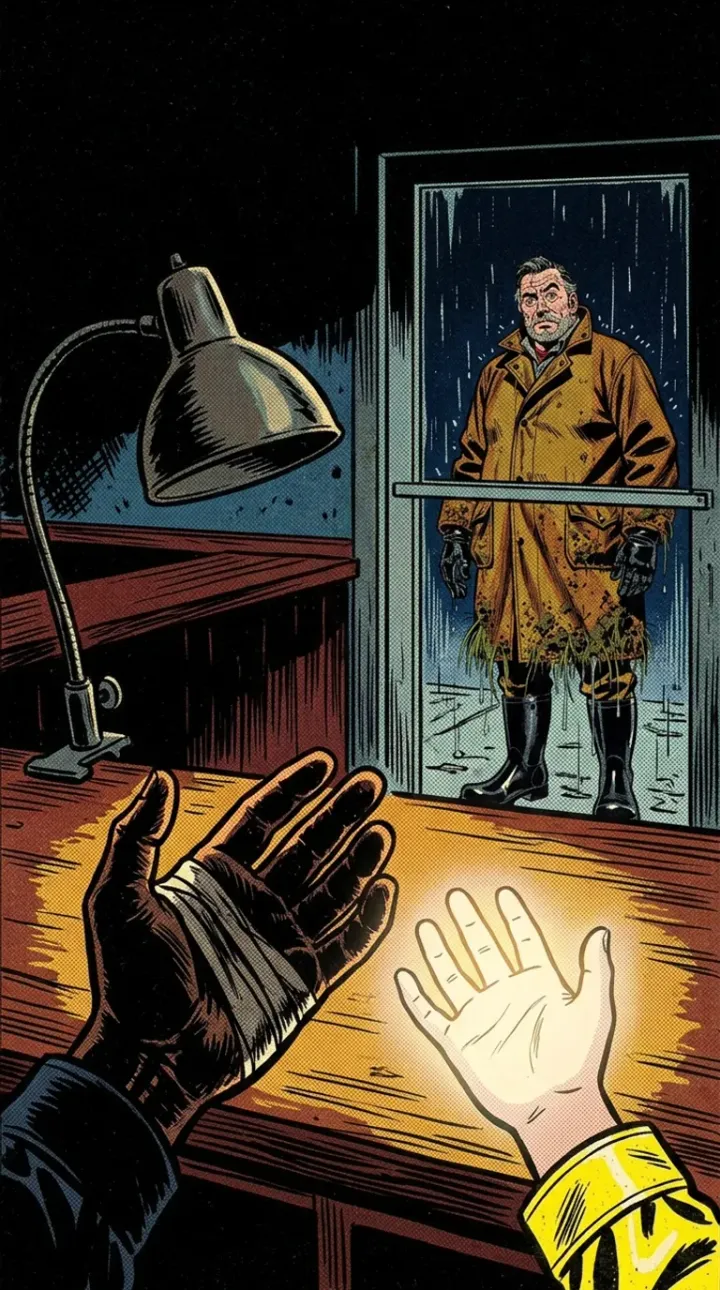
Then the read-aloud check. Before anything is drawn, listeners hear the narration without the pictures and say what they could follow. They marked two lines: the light in panel 7 ("a nine-year-old dressed as Dot holds a gold palm" is how they put it) and Walt's dark palm in panel 8. For issue 3 the check also marked things we had never written; it has since been fixed to listen only for what the captions say, so these two are fair. Both make sense with issues 1 to 3 behind them. Heard alone, a girl with a light in her hand comes out of nowhere. We drew it anyway, as we did with issues 1 to 3, and that is the honest catch with a payoff issue: it leans on the three before it.
It was written and made on Halloween itself, so unlike issues 1 to 3 it had no extra reads before drawing. The studio's own checks were all it got.
The panels
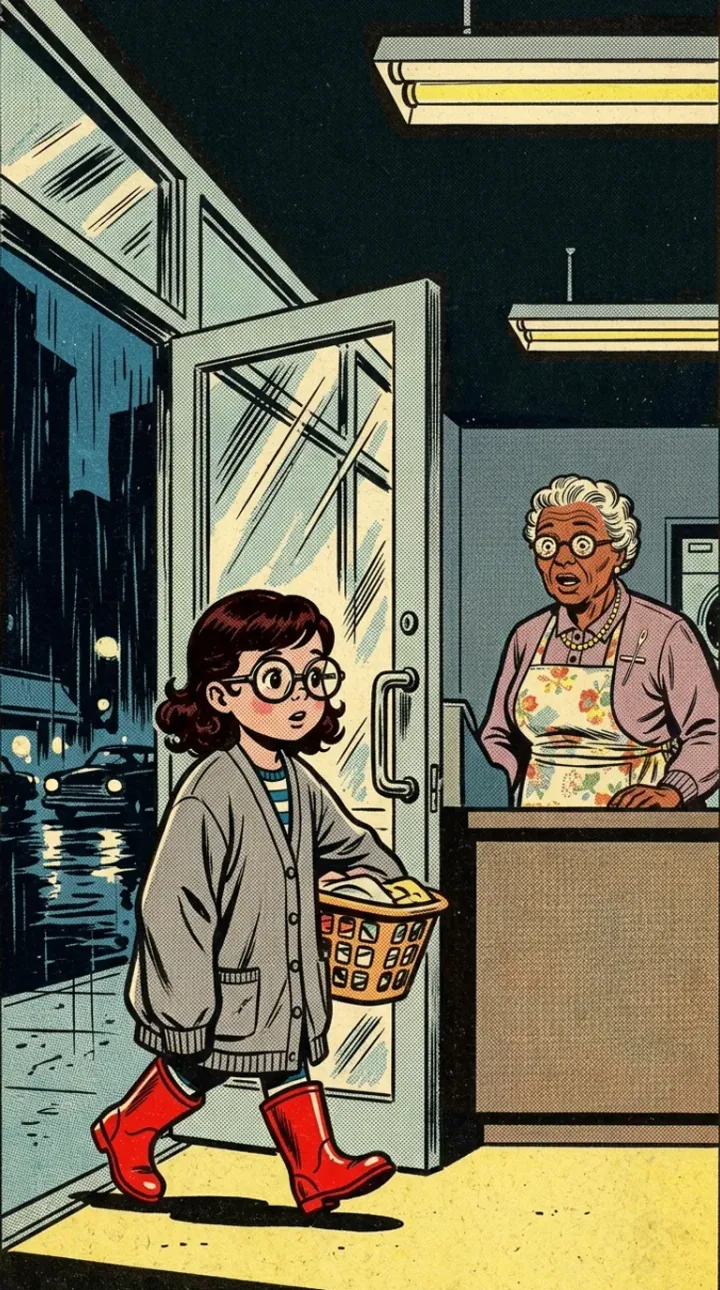
Eight panels, one take each, and seven were right first time. Panel 7 put the glowing palm in Dot's hands, with Mina beside her in her raincoat from issue 1. One note fixed it in a single retake: the light is Mina's, held out like a lantern, and Dot stands behind her with empty hands.
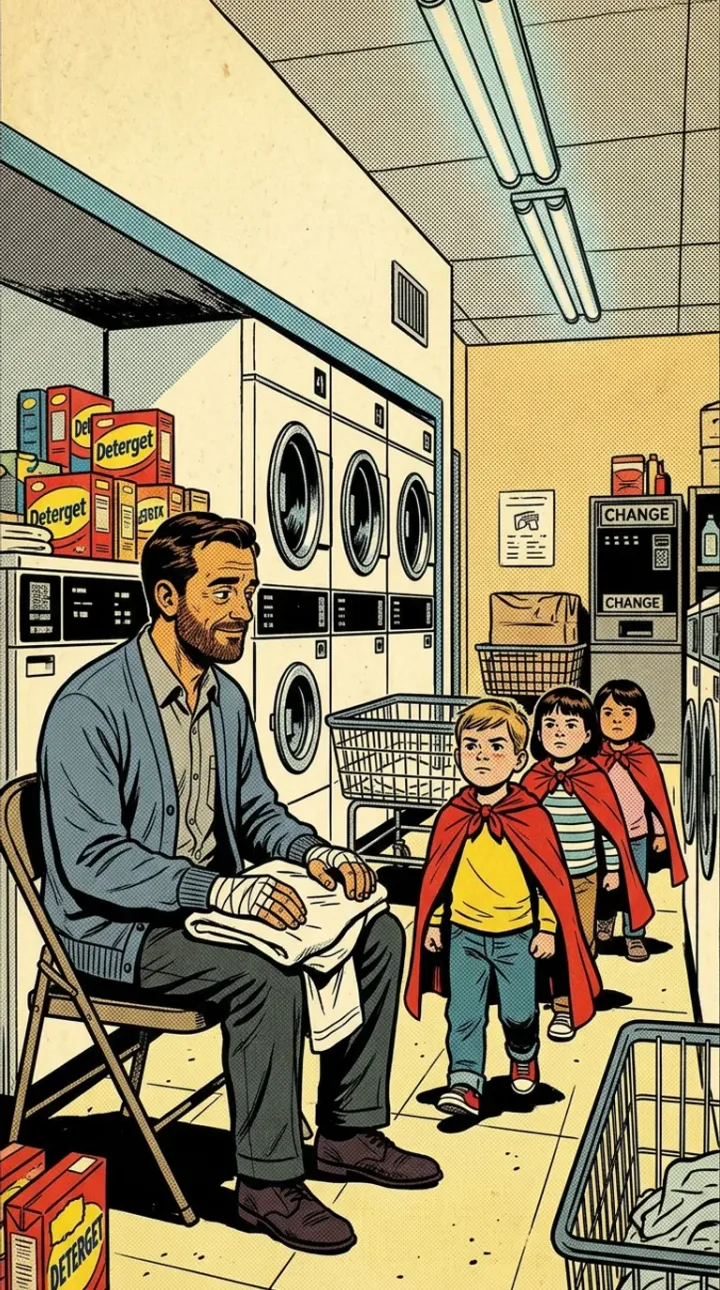
One thing came out of the drawing that we didn't ask for. Panel 1 painted DOT'S LAUNDROMAT over the shopfront, the same sign as in issue 1, though the brief asked for no lettering in the pictures. It matches the series, so it stayed.
The finish
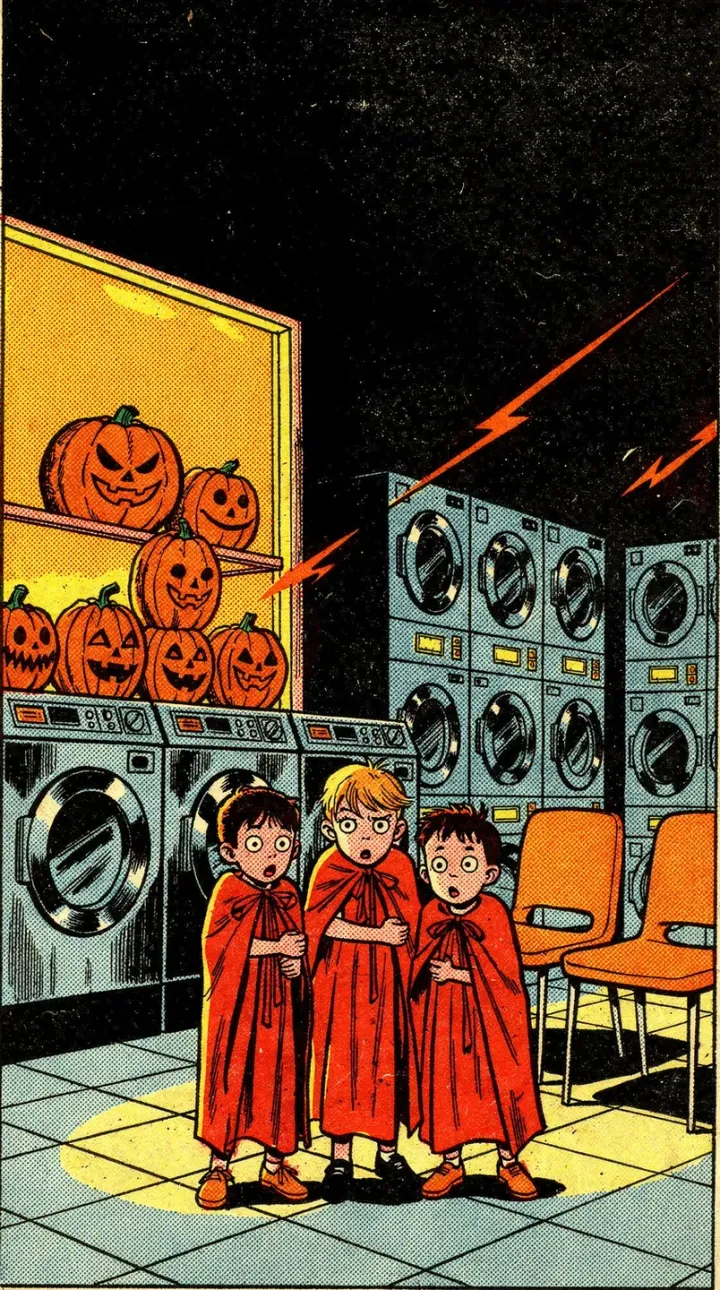
The narration was recorded, the captions lettered in, and the issue was finished on Halloween. It ends on the question the next issue has to answer: Walt went under with his light and came up without it. Now who tells a nine-year-old?
What it cost
21 credits: the writing, eight panels, one retake, the narration and the finish. The idea was free, added by hand. A plain issue runs about 20 credits today (about 25 in a premium look), and a new account starts with 35 credits.
Start at the beginning
Issue 4 is a payoff, so it reads best after the three before it. Issue 1, "Delicates" is where the peppermints start. Drawn and narrated by Panel & Ink; the story is ours.
Start with one idea of your own: your first issue is covered.