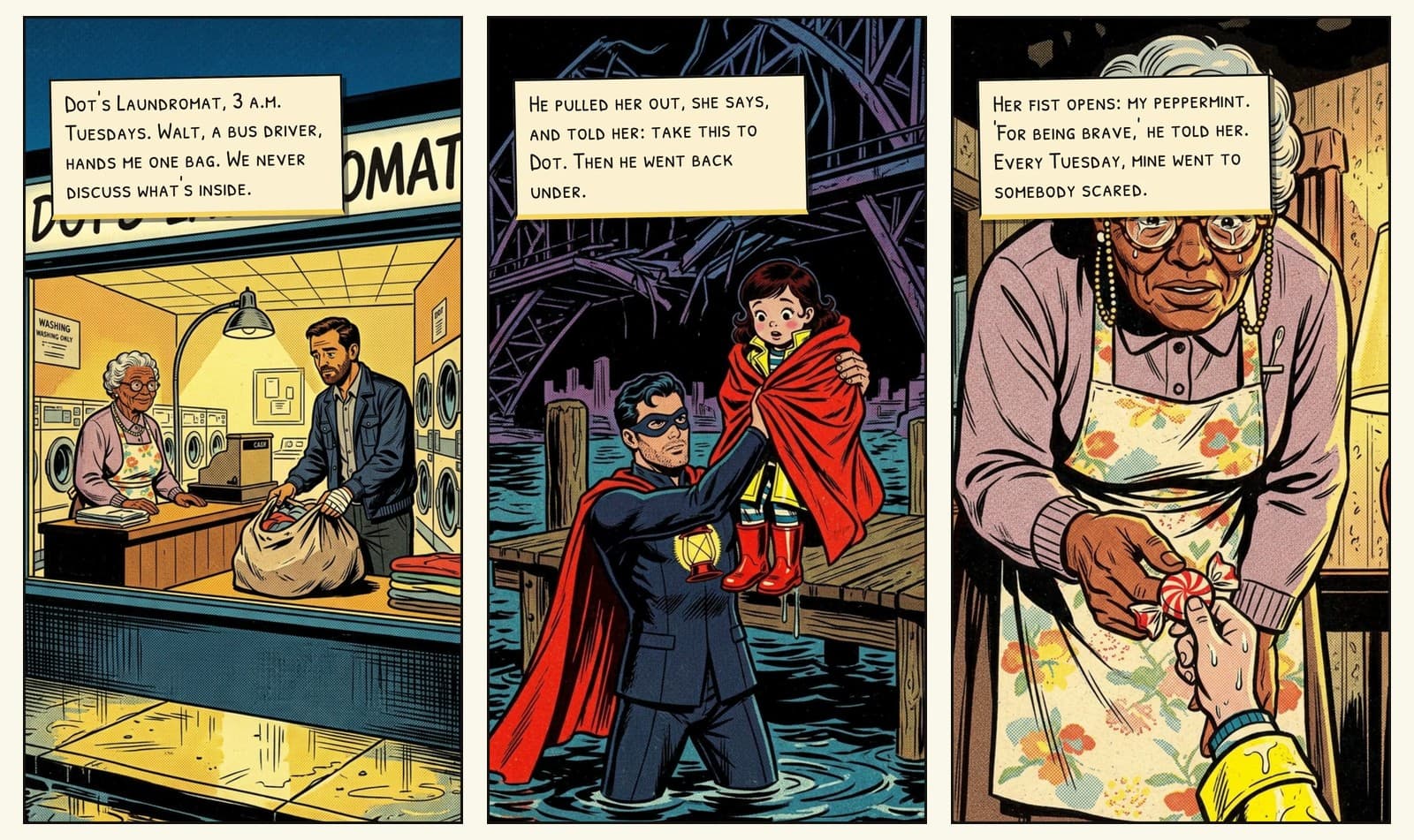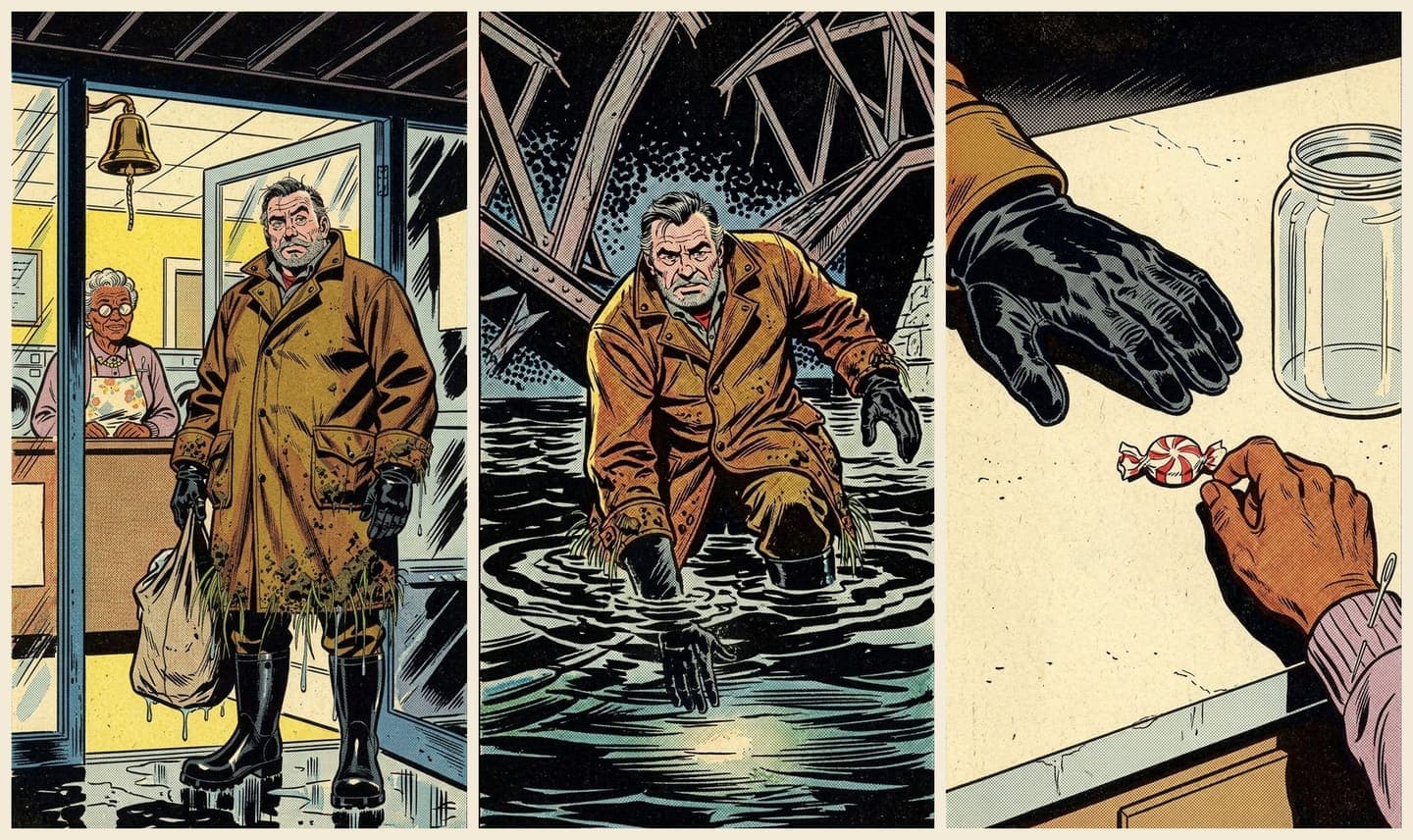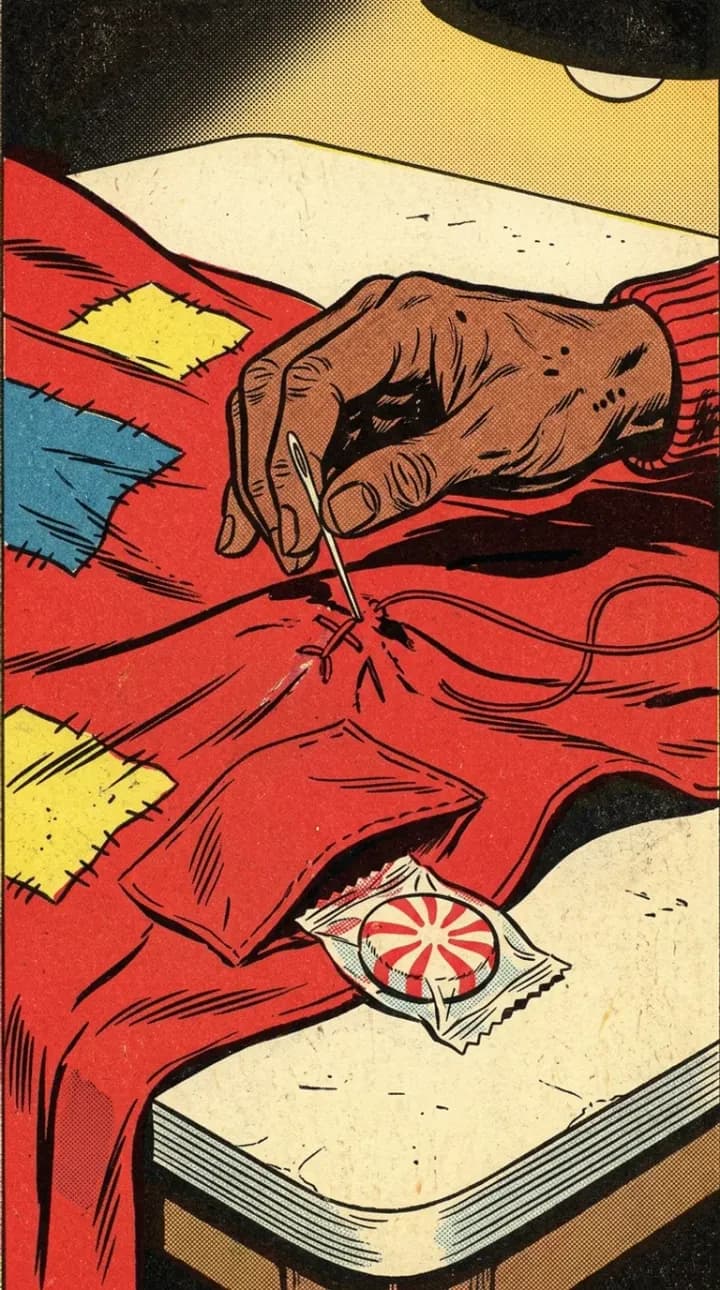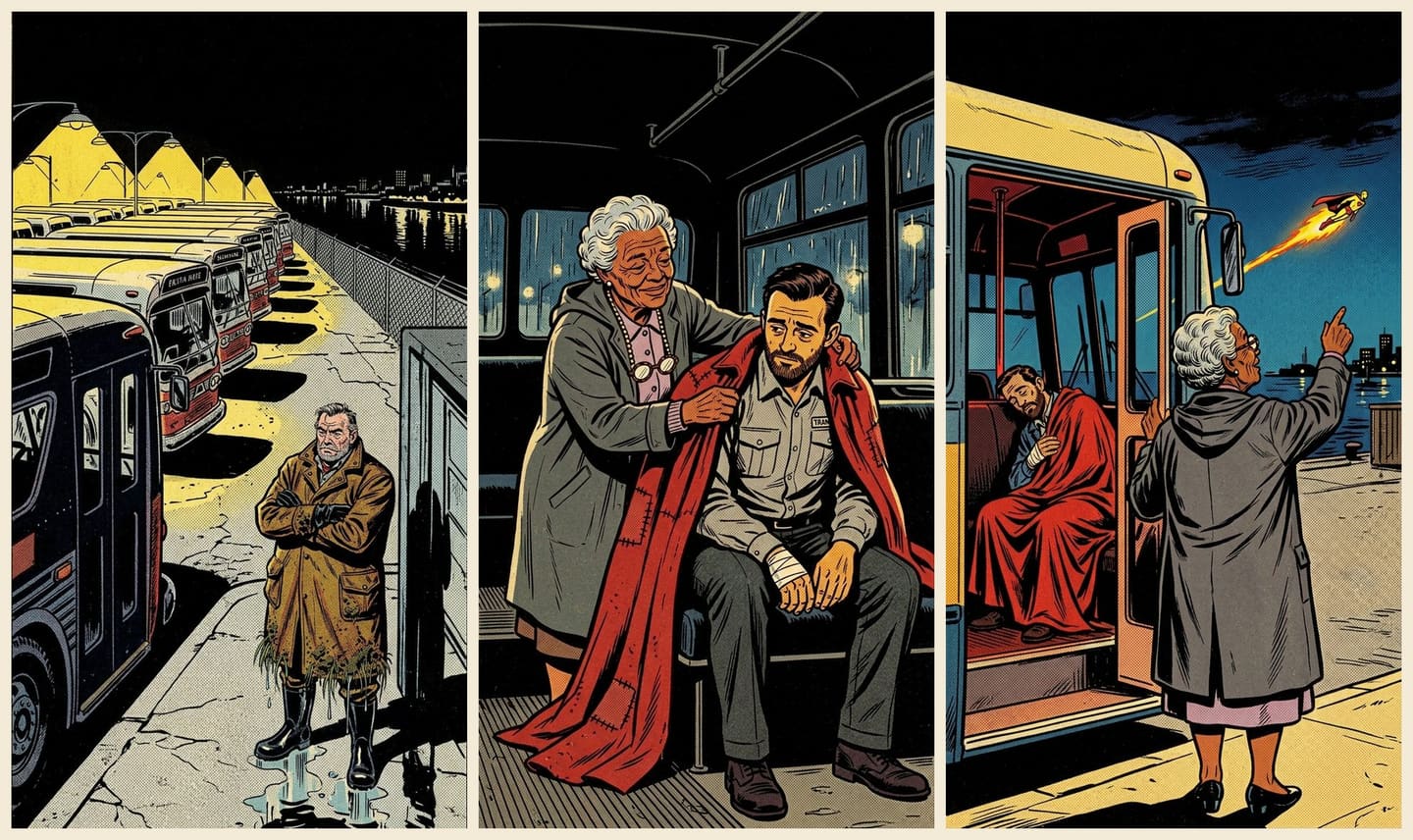
Issue 2 ended with the phone ringing at 4 a.m.: a bus rattling past on the line, then Silt saying Walt was asking for her. Issue 3 is the night ride that follows. It's also the issue where the studio took the most liberties with our script, so this is mostly a story about getting it back.
The idea
Same comic, same cast, same look. We added two places to the comic's world first, the river bus depot and the inside of the Number 9 night bus, so the writer and the drawings would describe them the same way every time. Places are free to add.
Then the issue: Dot closes early for the first time in thirty years and takes the Beacon's cape. She knows that rattle on the phone was the Number 9, Walt's route, and rides it to the end of the line. Silt is standing guard at one dark bus. Walt is inside, alive, his light nearly out. She wraps him in the cape. He asks for a peppermint, and she gave her last one to Silt in issue 2.
The peppermint matters. In issue 1 Dot learns where hers went. In issue 2 she gives her last one away. In issue 3 the man who always gave them away asks for one, and there's none left. The test reads said that was the beat that made the series build instead of repeat.
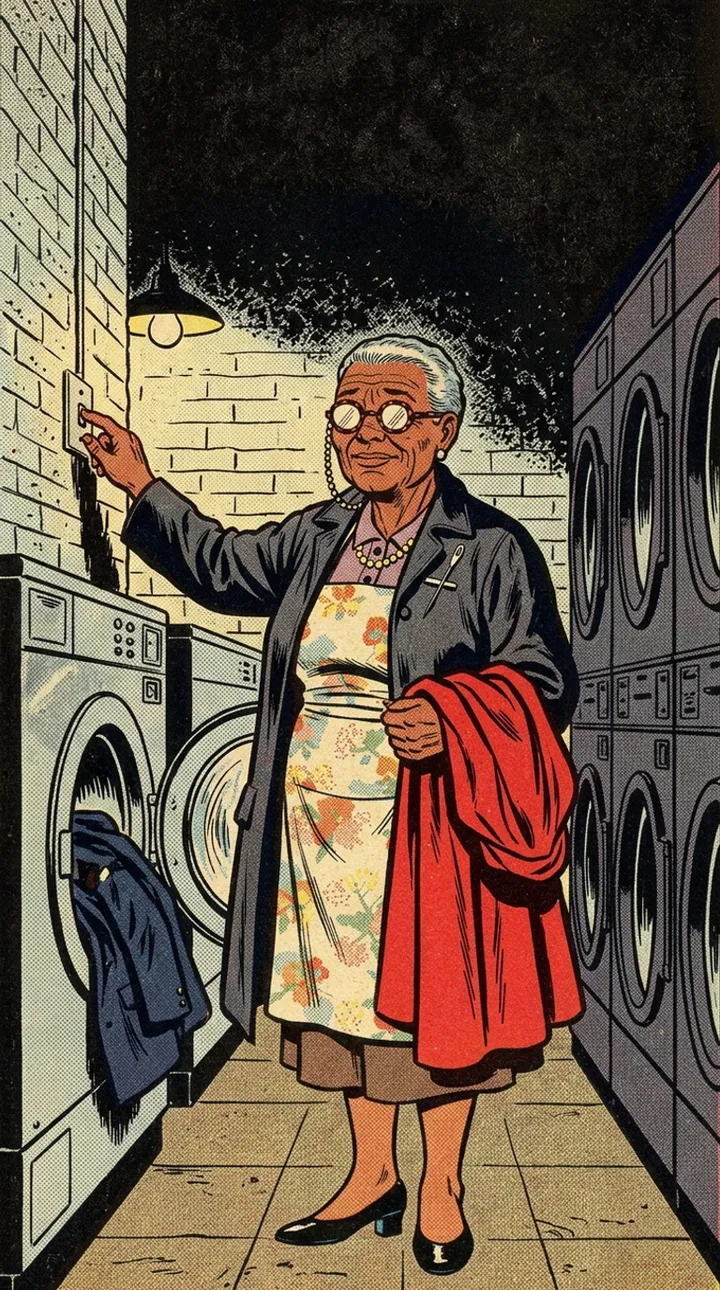
The script
We gave the writer eight captions. It came back with seven panels and no peppermint. You can't add a panel once the issue is written, so we rebuilt the story in seven on the storyboard:
- The depot and Walt on the back seat stayed as two panels; the writer had already set up who appears in each.
- "Silt hid him here for days. My peppermint bought Silt's trust." joined Walt's panel, so the reason Silt called her is in the story.
- That freed the sixth panel for the cost: "He asks for a peppermint. All these years, he's never kept one. And my pocket's empty."
The studio's cold read, which hears an issue on its own, caught two lines. "I've never once closed early" was heard as Dot not closing, so it became "I've never closed early before. Tonight…". And the ending didn't make clear that the man asleep on the bus is the real Beacon, so the last line names him. Every edit was free, and every caption kept to eighteen words.
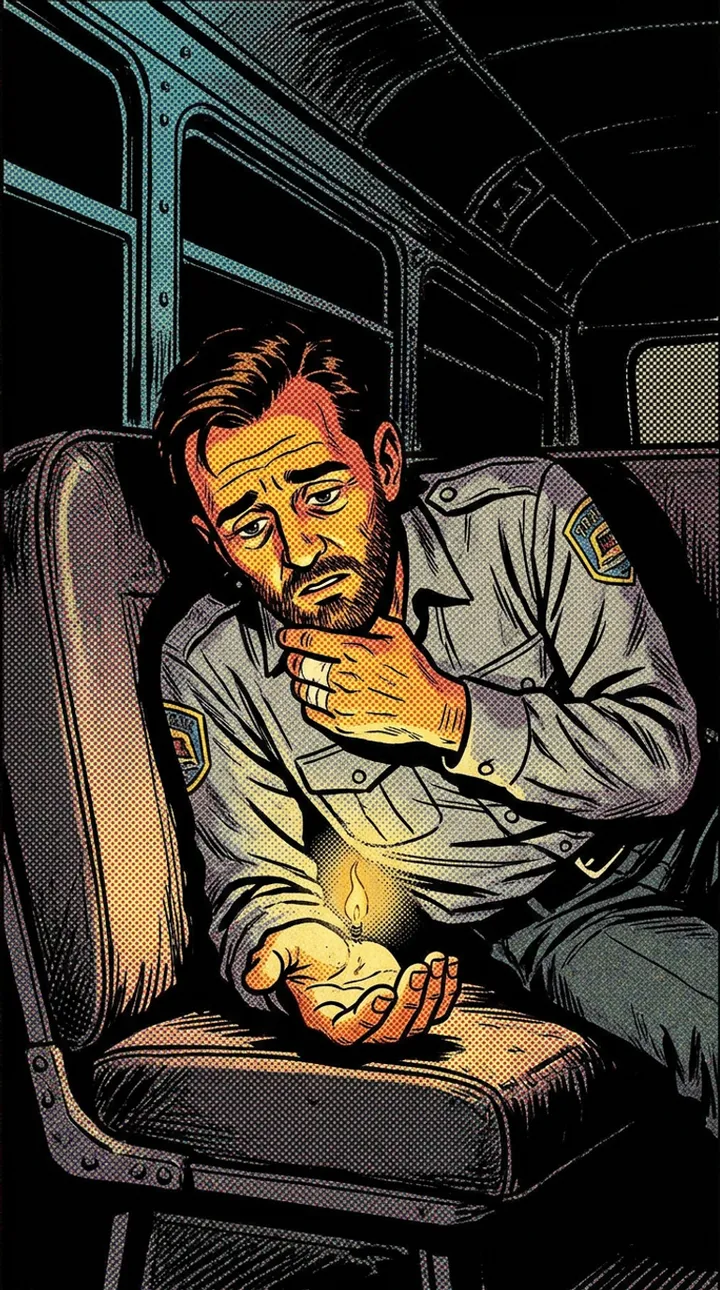
The panels
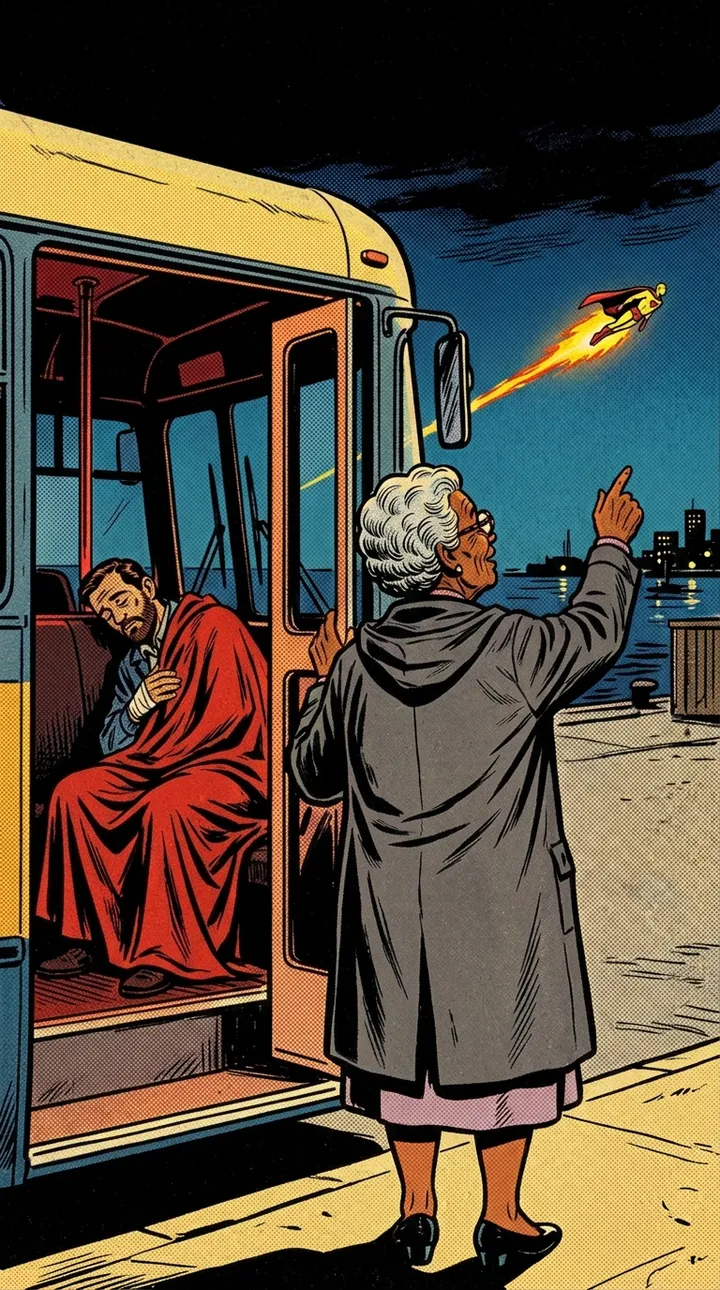
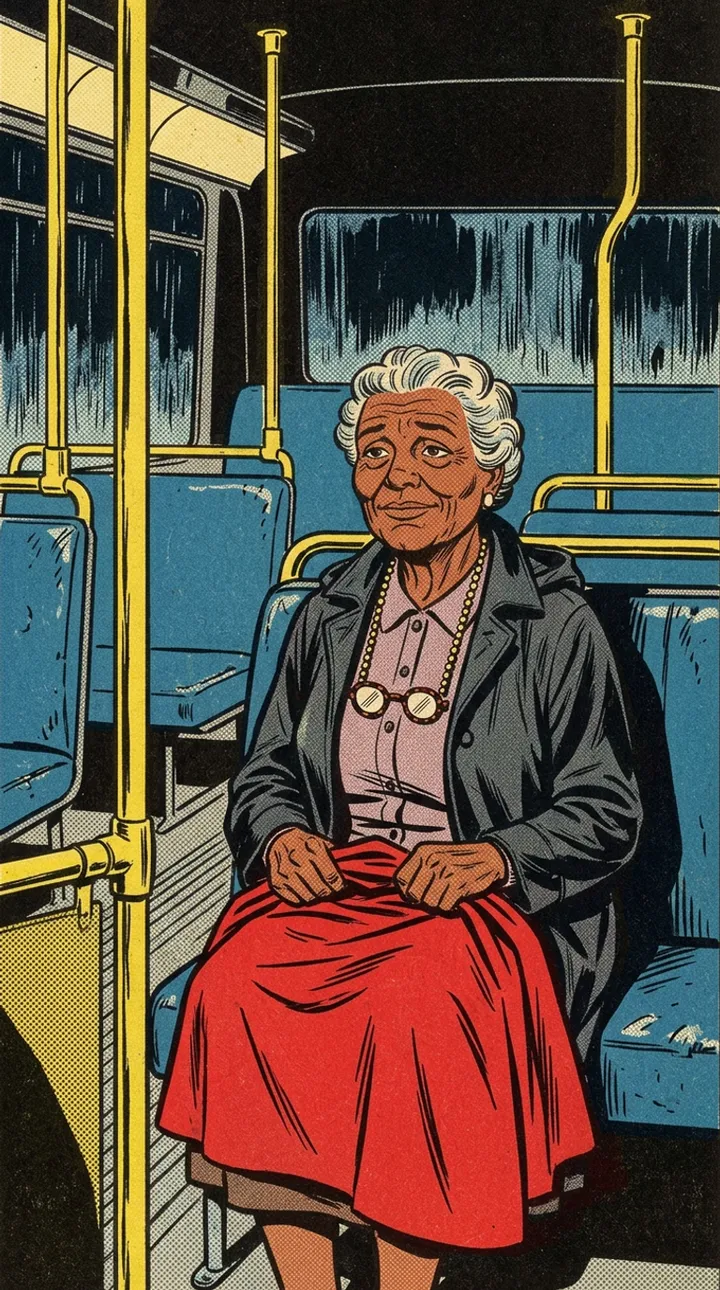
Seven panels, one take each. The pictures were right, but two had the same problem: Dot's raincoat was grey in the first panels, pink in panel 5 and green in panel 7. A comic reader would notice before the story did. One note on each, a plain dark grey raincoat, and both retakes matched.
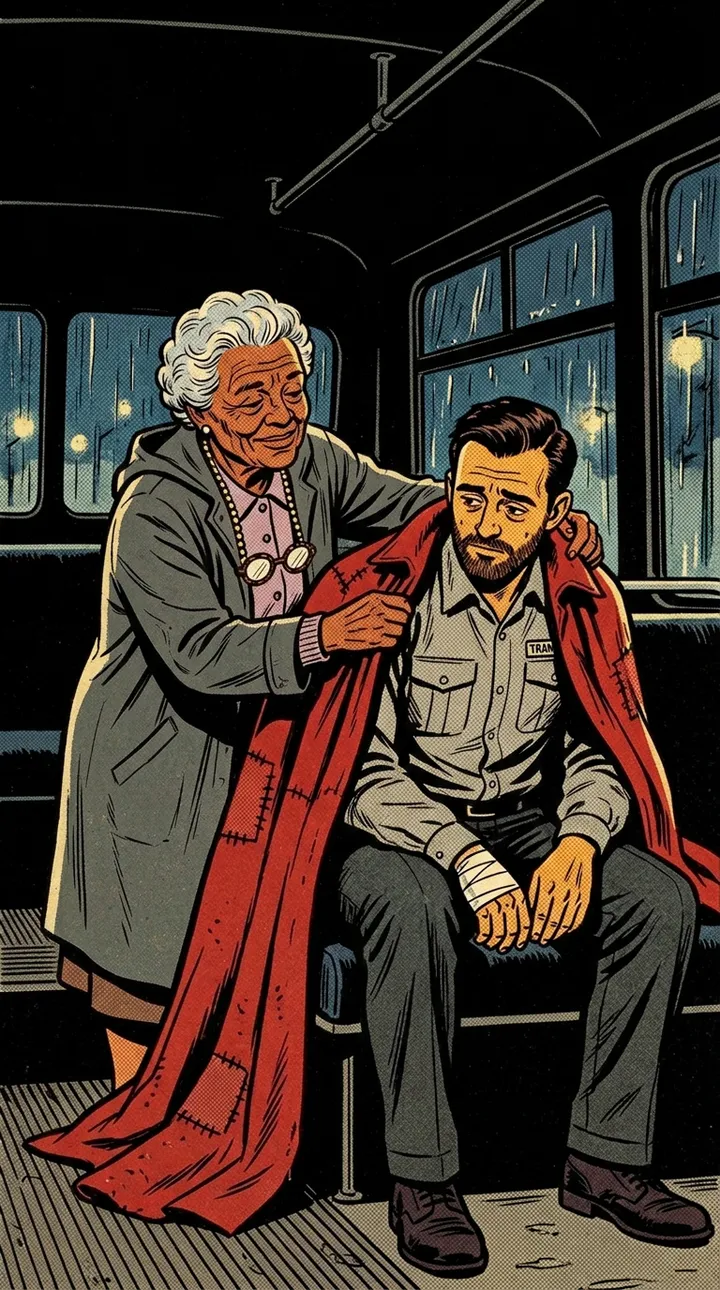
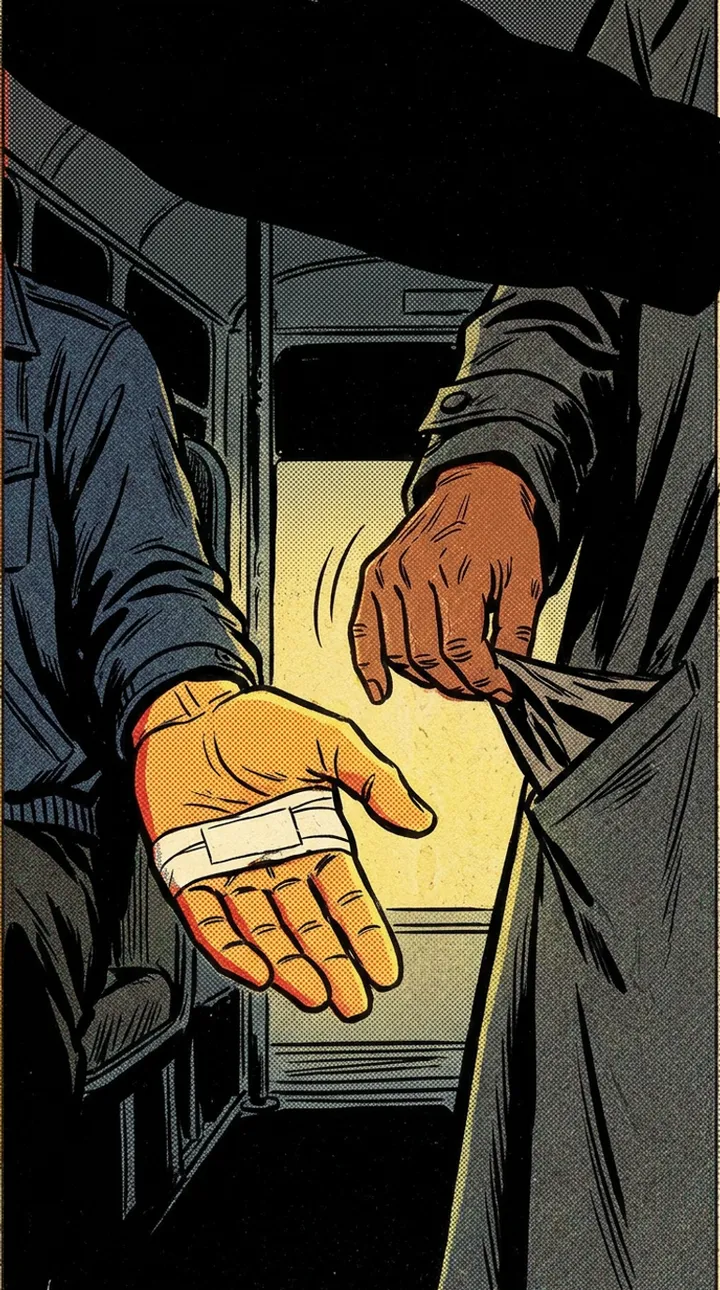
The finish
The narration was recorded and the captions lettered in, and the issue finished at 48 seconds. It ends on the question the next issue has to answer: someone in a cape is flying over the harbor, but the Beacon is right here, asleep in the bus.
What it cost
22 credits: 1 to turn our notes into the issue's idea, and 21 for the issue (the writing, seven panels, two retakes, the narration and the finish). Rebuilding the script on the storyboard and re-running the cold read cost nothing. A plain issue runs about 20 credits today (about 25 in a premium look), and a new account starts with 35 credits.
Start at the beginning
Issue 1, "Delicates" is where the peppermints start. Drawn and narrated by Panel & Ink; the story is ours.
Start with one idea of your own: your first issue is covered.