A comic script is a note to whoever draws the comic. For every panel it says two things: the picture, and the words that go on it. The page numbers and labels are there so the artist and the letterer never have to guess.
Here is the format, shown on a real script: the first page of Wash & Fold No. 1, "Delicates", the comic we make for ourselves.
The layout
A full script goes page by page, then panel by panel. Each page opens with its number and how many panels it holds, so the artist can plan the grid first. Under each panel:
- The description. One moment, in the present tense: where we are, who is in it, what they are doing. Name the shot only when it matters. A character's first appearance goes in capitals.
- The words. Each on its own line with a label: CAPTION for narration, a character's name for a speech balloon, SFX for a sound.
Page one of Wash & Fold No. 1
The script we handed the studio, set out the way a print script is:
PAGE ONE (four panels)
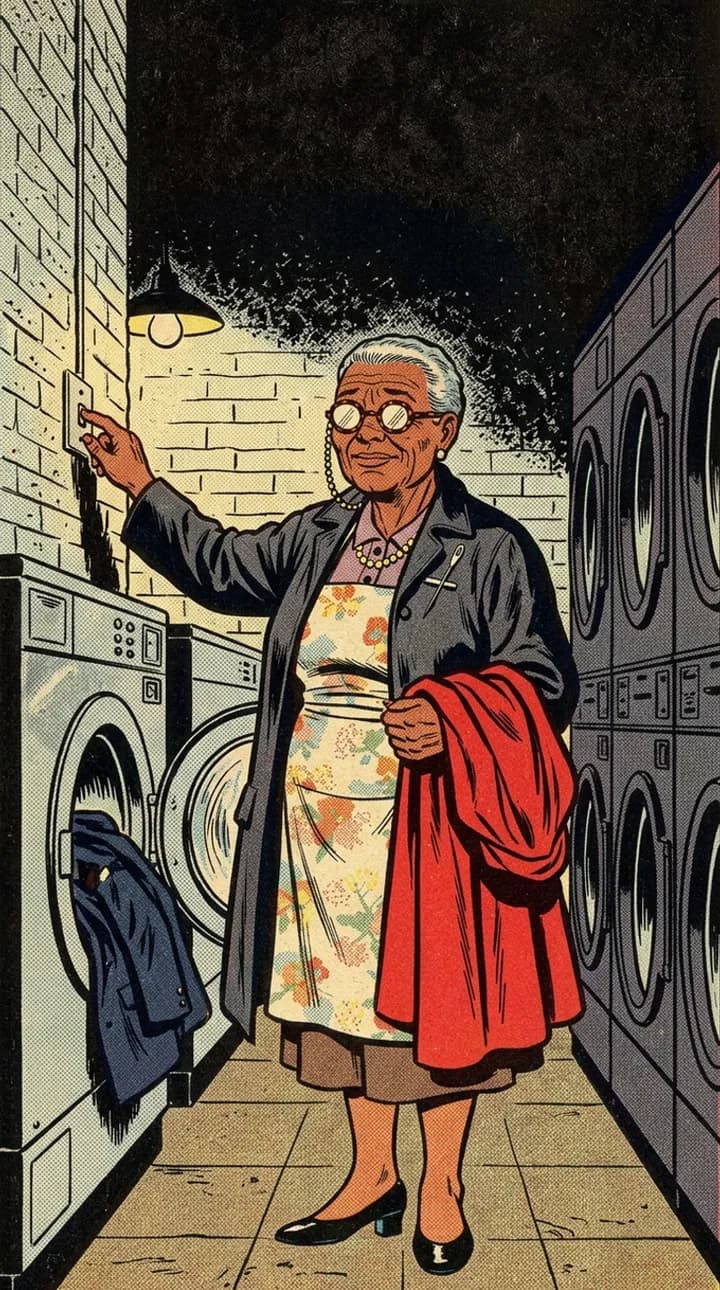
Panel 1. 3 a.m., an all-night laundromat glowing on a wet, empty street. WALT, a tall, tired man in a bus driver's jacket, sets a canvas bag on the counter, knuckles bandaged. DOT, seventy, watches him over her glasses.
CAPTION (DOT): Dot's Laundromat, 3 a.m. Tuesdays. Walt, a bus driver, hands me one bag. We never discuss what's inside.
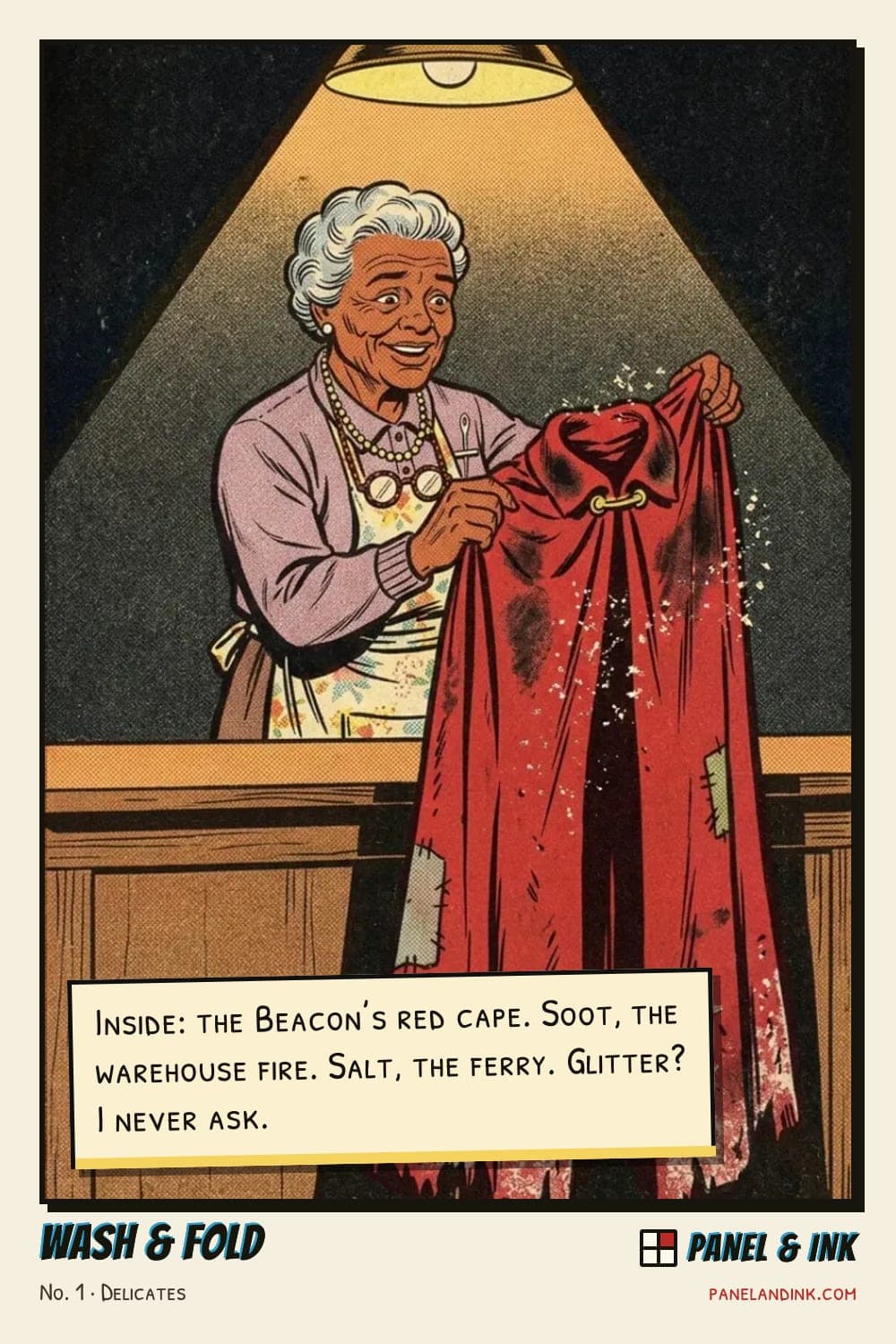
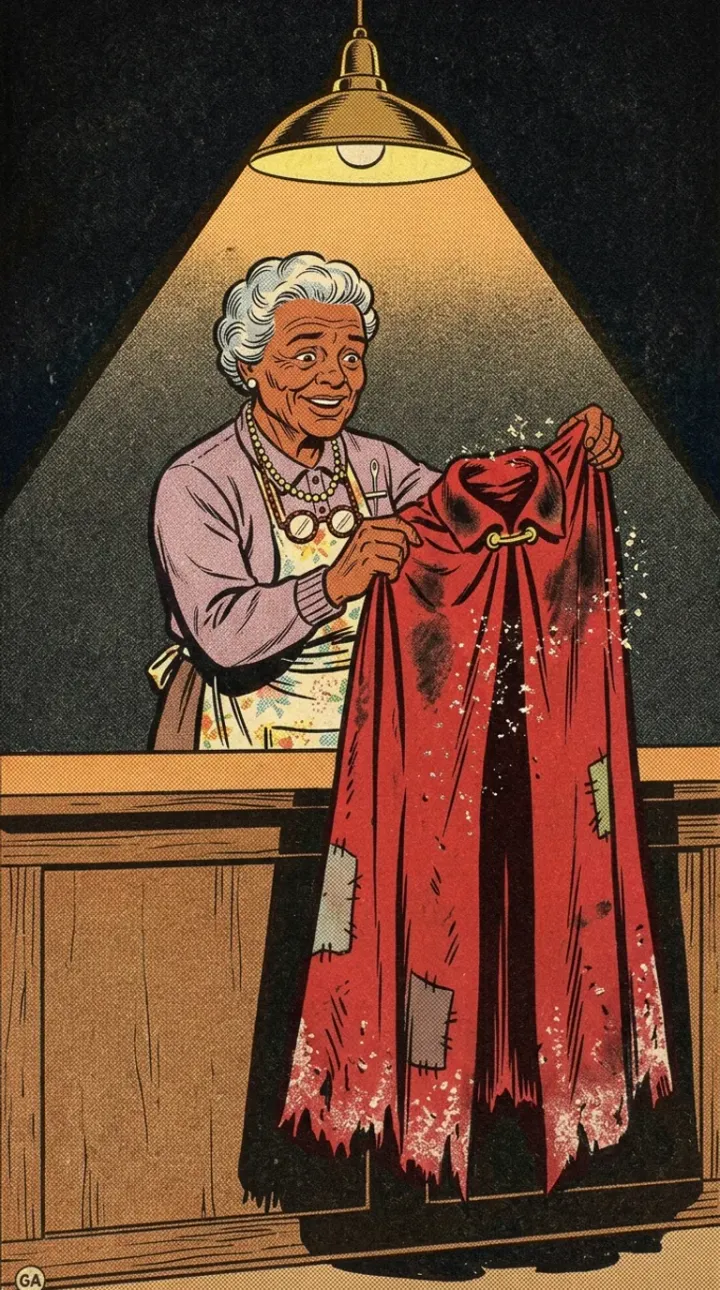
Panel 2. Dot alone, holding a long red cape up to the light: soot smudges, a salt-crusted hem, a sparkle of glitter.
CAPTION (DOT): Inside: the Beacon's red cape. Soot, the warehouse fire. Salt, the ferry. Glitter? I never ask.
Panel 3. Close on Dot's hands stitching a tear in the cape; a red-and-white peppermint beside a small inside pocket.
CAPTION (DOT): I wash it, mend every tear, and tuck a peppermint in its pocket. Every Tuesday, the peppermint's gone.
Panel 4. Dot alone in the empty laundromat, looking up at a TV above the dryers; on screen, a caped figure holds up a buckling bridge over a dark river.
CAPTION (DOT): Then one Tuesday, Walt doesn't come. On the TV, the Beacon is holding up the falling Harbor Bridge.
What each part is doing
One moment a panel. Panel 1 is a hand setting down a bag, not Walt walking in, setting it down and leaving. If a description needs the word "then", it is two panels.
Describe what can be drawn. "Soot smudges, a salt-crusted hem" is a drawing. "She has done this for years" is not. That belongs in a caption, and it is there in one word: Tuesdays.
Let the words do what the picture can't. Panel 2 shows the soot; the caption says where it came from. A caption that repeats the picture ("Dot holds up a cape") wastes the panel's room.
Name people early. In the first draft the narrator's name was first heard in panel 6, and the cold read (listeners who hear only the captions) couldn't place her. Panel 1 now opens on Dot's Laundromat. The whole script and what the reads changed have their own post.
Give a close-up a reason. Only panel 3 says "close on", because the peppermint pocket is small and it is the story.
End the page on a question
Page one stops on the jolt: Walt doesn't come, and the hero is on TV holding up a falling bridge. The reader turns the page to find out, and panel 5 is waiting.
A reveal belongs on the first panel after a page turn, never the last panel before one, because the eye takes in a whole open spread at once. Put the question at the foot of a right-hand page and the answer on the next.
Fewer words than you think
Words take room on the art. Three balloons and a caption, and the letterer covers half the picture. Wash & Fold's captions are eighteen words at most, because in a Panel & Ink issue a narrator reads each one while its panel is on screen. Write to that and you will rarely crowd a print page either.
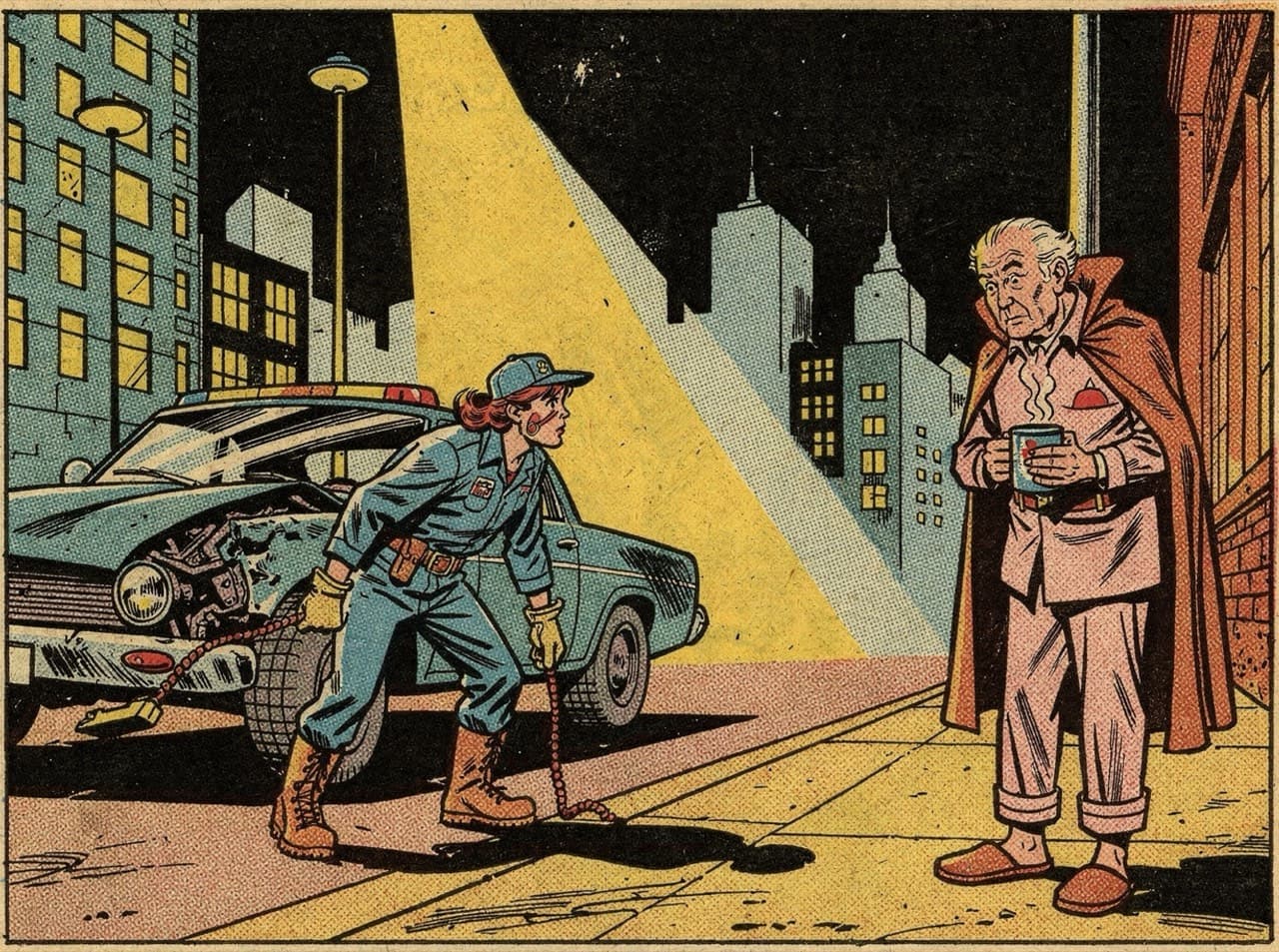
A narrated comic has no speech balloons, so the narrator reports what people say. Panel 7 does it inside the limit: Her fist opens: my peppermint. "For being brave," he told her. Every Tuesday, mine went to somebody scared.
Full script or plot first
What's above is a full script: every panel and word settled before anything is drawn. Plot first hands the artist a page-by-page summary and adds the words to the finished art; it suits a team that has worked together for years. For a first comic, write the full script. The holes show up on the page, where they cost nothing to fix.
Writing it in Panel & Ink
The storyboard is the script: every panel's caption and picture description side by side, both yours to change, for free, before the panel is drawn. Start from a paragraph and let the writer lay out the panels, or paste a script like the one above. Check what comes back: on Wash & Fold No. 2 the writer merged two of our beats, and we put them back on the storyboard. Then the cold read hears the captions alone.
Writing an issue, the script and its cold read, is 6 credits. Every panel is drawn from the cast's model sheets in the look you pick; Wash & Fold is Silver-Age Halftone. Got a book in a drawer? See your novel as a comic. Only a cape and a hunch? Start with the superhero ideas.
Write your first issue — 35 credits when you sign up, no card. Drawn and narrated by Panel & Ink; the story is yours.