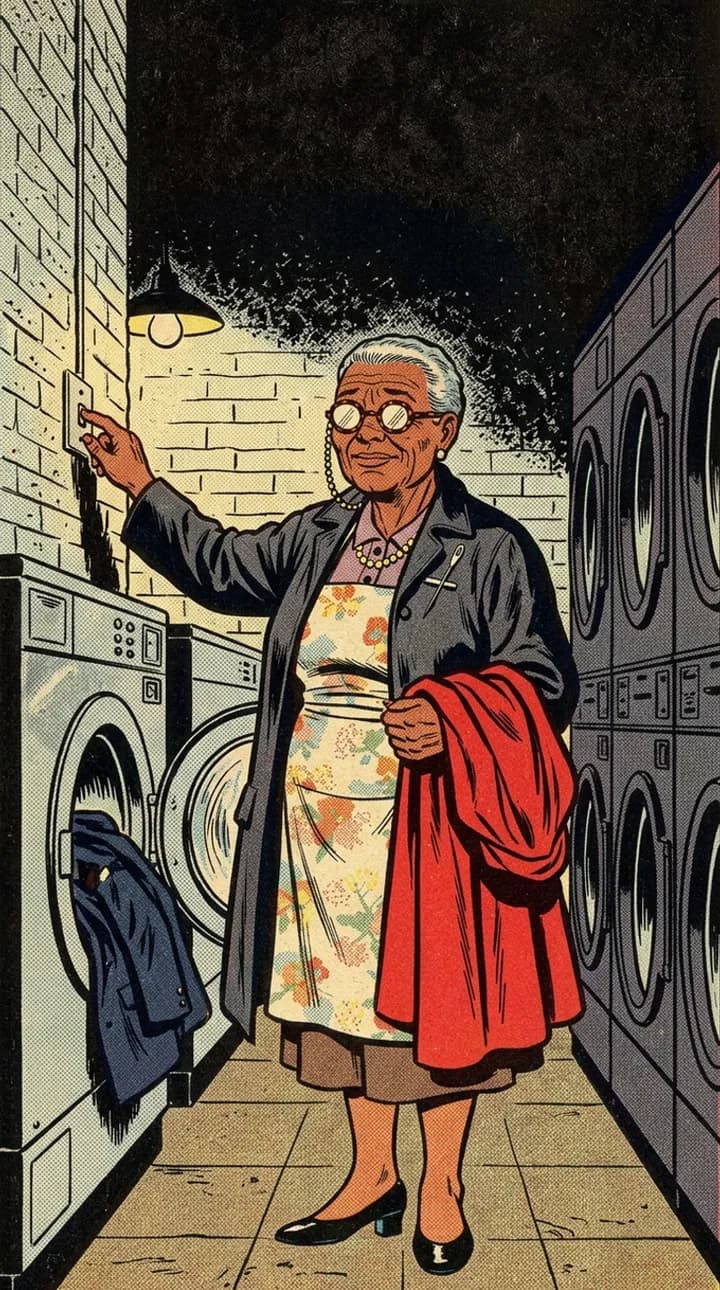
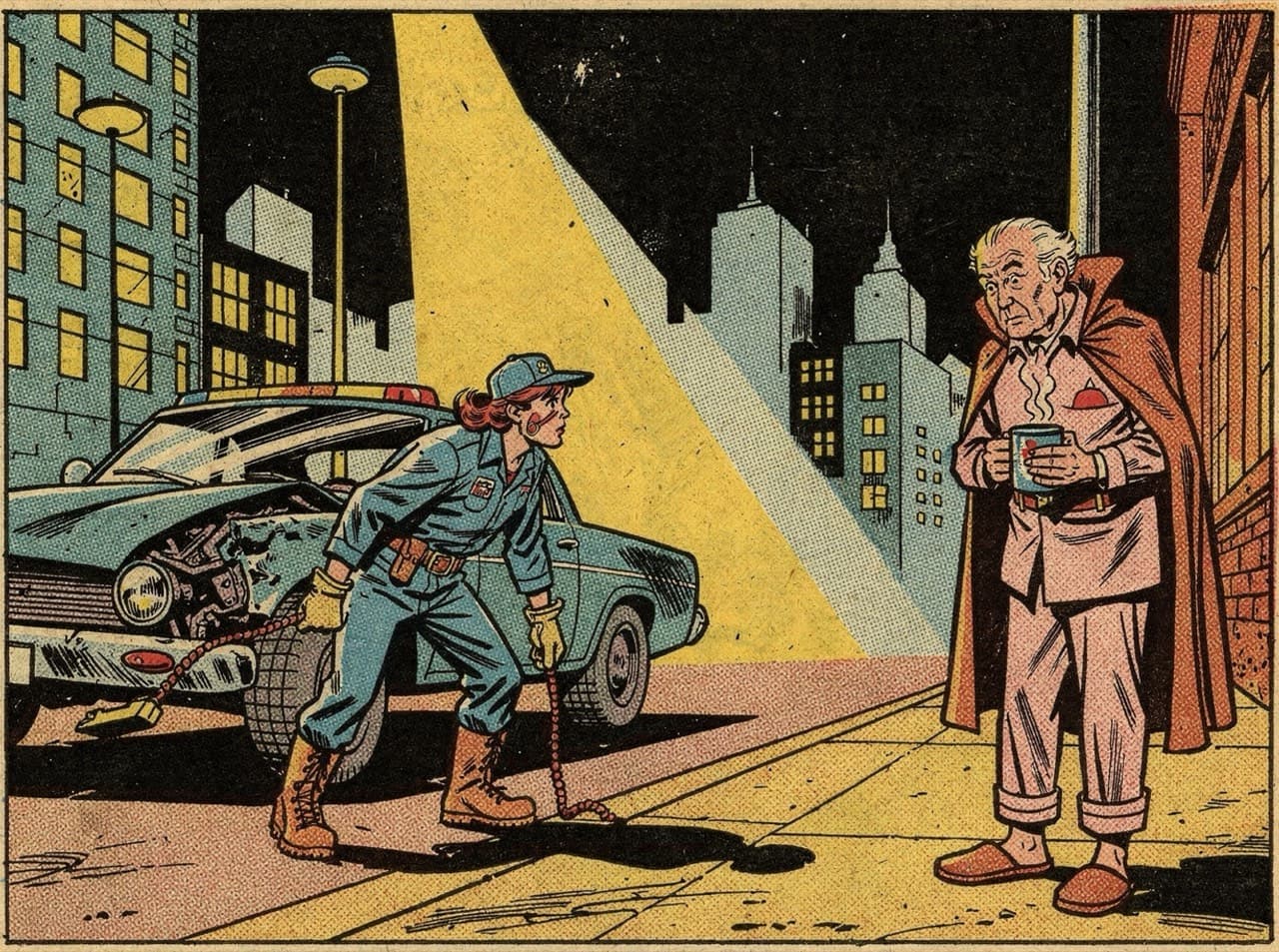
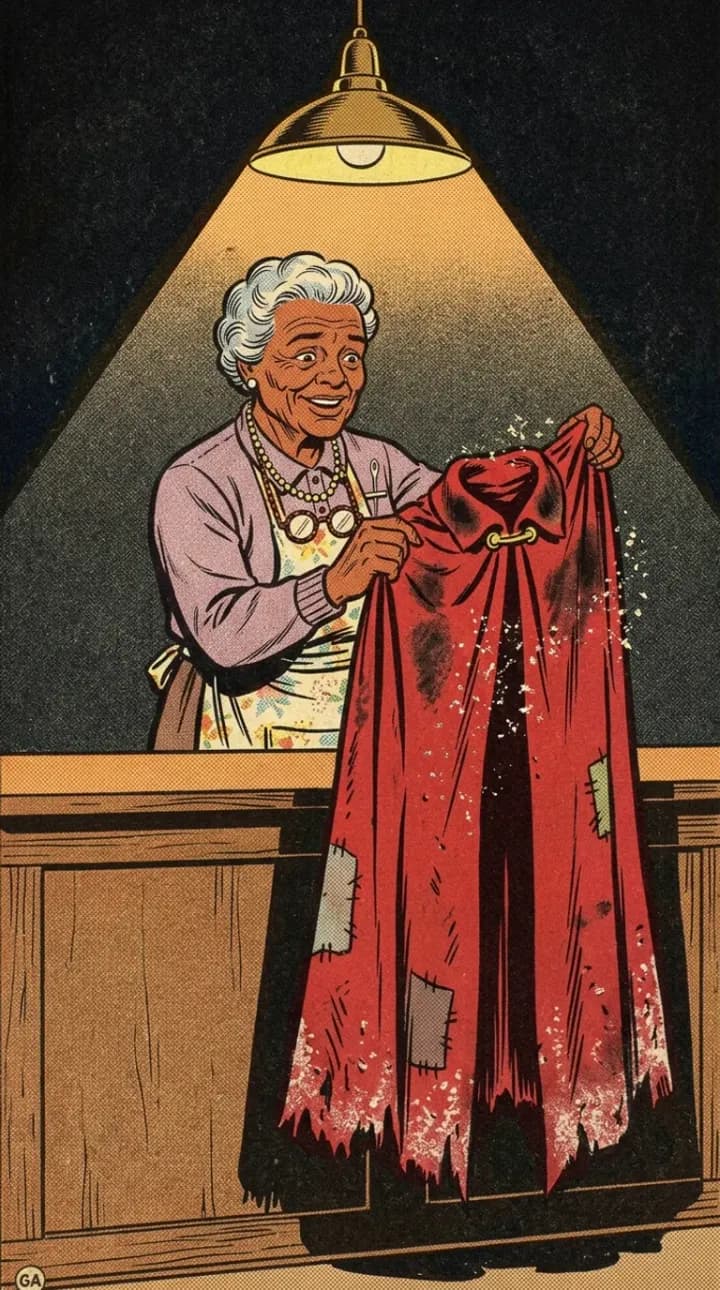
Lettering is every word on a comic page: the captions, the balloons and the sound effects. Done well, the reader never notices it.
Here are the basics: the containers words come in, where they go on a panel, and how many words one panel can hold.
Captions: the narrator's box
A caption is a box, usually a rectangle, with no tail. It holds the words nobody in the panel says out loud:
- Narration. A storyteller's voice, or a character telling their own story.
- Time and place. "Later that night." "Dot's Laundromat, 3 a.m."
- Inner voice. What a character thinks but keeps to themselves.
By custom the first caption sits at the top left, because that's where the eye lands first. A character's own captions are often coloured to match them, so the reader knows whose voice it is.
Balloons: who is talking
A balloon holds speech, and its tail points to whoever is speaking. The shape tells you how the words are said:
- Speech balloon. A smooth oval, the tail aimed at the speaker's mouth.
- Thought balloon. A cloud, joined to the thinker by a trail of small bubbles. Many modern comics drop it and use a caption for thoughts instead.
- Whisper and shout. A dashed outline for a whisper, a jagged burst for a shout.
- Off panel. A tail that runs to the panel's edge: someone is speaking from outside the frame.
Order matters. In English-language comics the reader goes left to right and top to bottom, so the first speaker needs to be on the left or higher up. Put the person who answers on the left, and the tails cross. Manga reads right to left, so there the first speaker sits on the right.
Sound effects are the third kind of lettering: the CRASH and the knock at the door. They are usually drawn into the art rather than boxed.
Where the words go
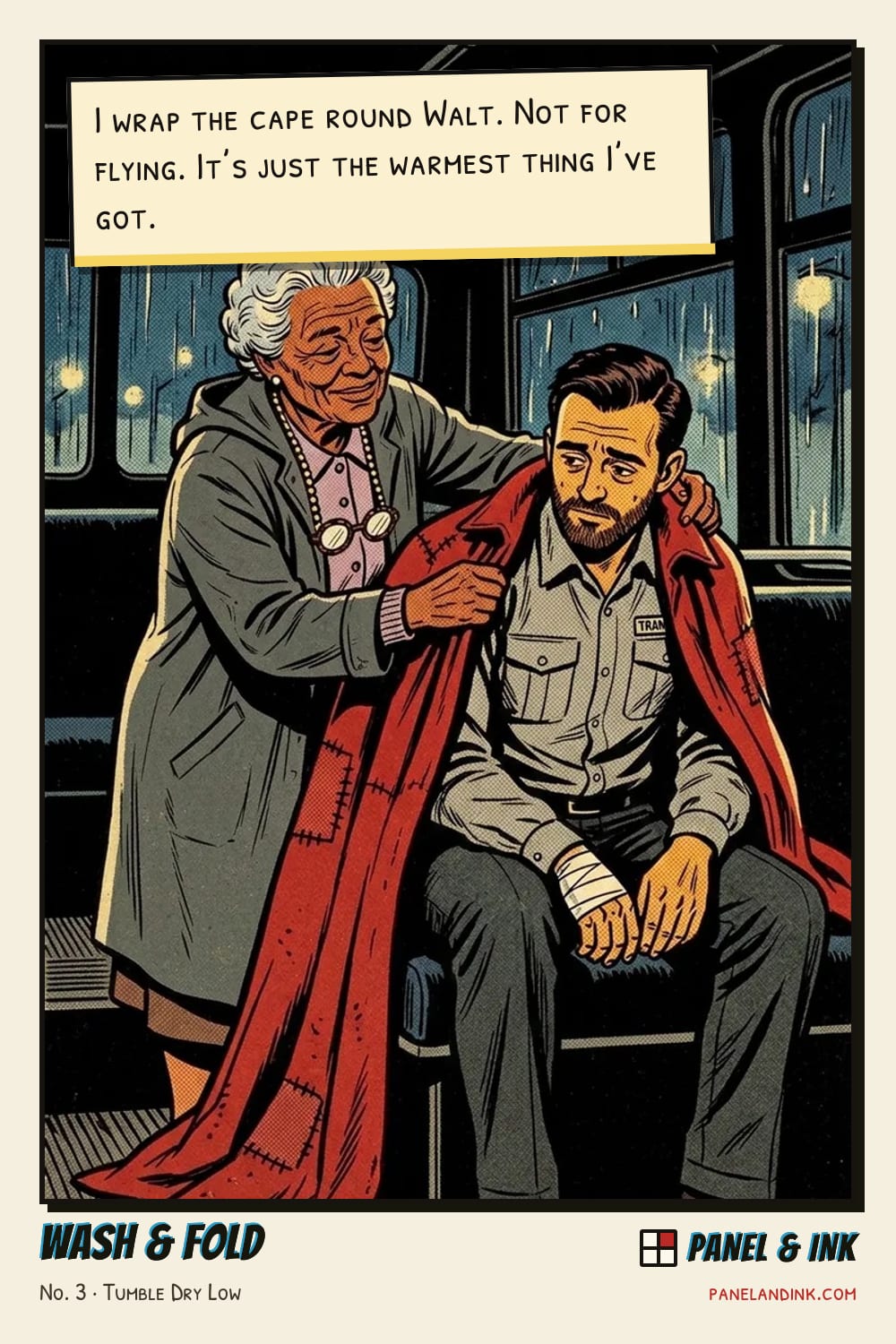
Words cover art, so the first rule is: never on a face, and never on the thing the panel is about. A good artist leaves room for the lettering when drawing the panel. Sky, a wall, a dark corner of the room: empty space that is still part of the scene.
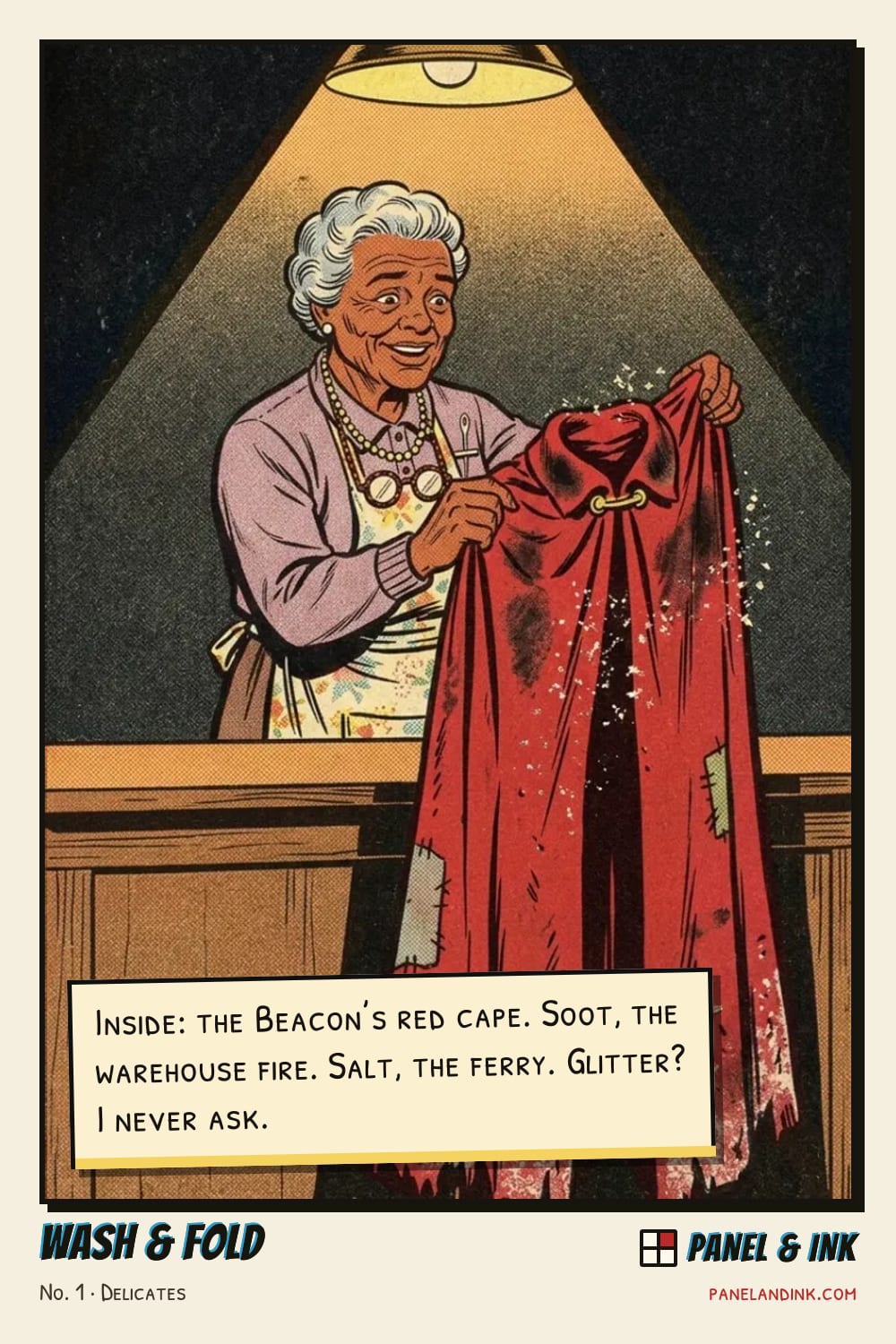
In that panel the lamp and Dot's face fill the top, so the caption goes at the bottom, over the cape's torn hem. In a panel where the top is empty, the caption goes there instead.
How many words a panel holds
Fewer than you'd think. A common rule of thumb is no more than about twenty-five words in a balloon, and two or three balloons in a panel. Past that, the words start to cover the picture, and the reader stops looking at the art to get through the text.
Two habits keep the count down:
- Don't describe the picture. "Dot holds up the cape" is already drawn. Use the words for what the picture can't show: where the soot came from.
- One thought a balloon. If a line needs "and then", it may need its own panel.
When in doubt, read a panel's words aloud. If it takes longer to say than the moment would last, it's too long.
How Panel & Ink letters a panel
A Panel & Ink issue is narrated, so it is lettered the way a narrated comic is: one caption a panel, and no balloons or sound effects. Every word goes in the narration box, and a narrator reads it while the panel is on screen.
That means the narrator reports what people say, inside the caption. Wash & Fold No. 1 does it in panel 7: Her fist opens: my peppermint. "For being brave," he told her. Every Tuesday, mine went to somebody scared. The quote is there, in eighteen words.
Eighteen words is the studio's limit for a caption. On the storyboard, every caption shows its word count, and a caption long enough to need smaller type is flagged before anything is drawn. You can rewrite any caption there.
The picture is planned around the words, too. Each panel's description asks for a quiet stretch at the top, sky or a wall or shadow, where a caption can sit, but the drawing doesn't always keep it. So once a panel is drawn, the studio checks where the faces are. The box runs along the top edge or the bottom edge, whichever has no face on it. When both edges have one, or the check can't tell, the box goes see-through and the picture shows behind the words. That's why the two panels above letter at opposite ends.
The box takes on the look as well:
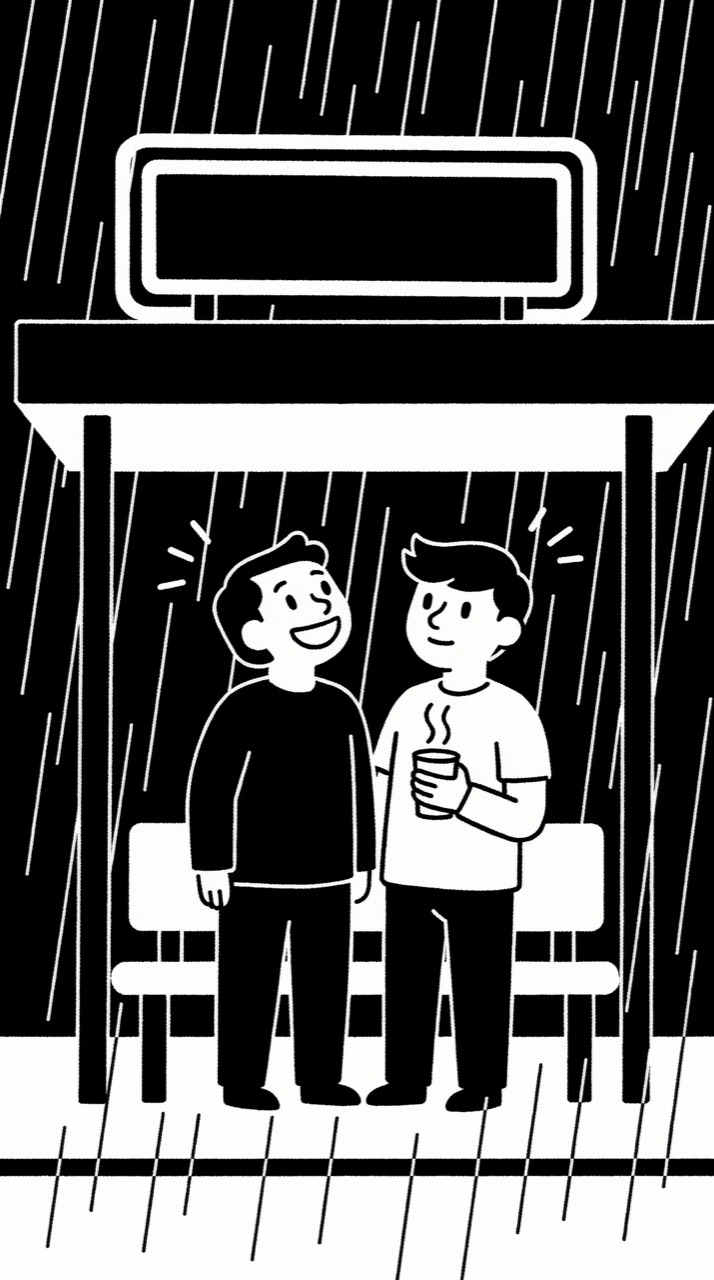
Ligne Claire is lit evenly, as if at noon, which leaves open daylight for a caption in almost every panel.
Comics where the words carry it
Some comics are mostly about the words. A memoir told in your own voice, a grandparent's memory in the way they tell it, a wedding story for the speech: each one lives in its captions. Eighteen words a panel makes you pick the line that matters. For what goes in each panel's description and caption, see how to write a comic script.
An issue on a standard look runs about 20 credits, and it finishes as a narrated video and a set of lettered panels.
Make your first issue — 35 credits when you sign up, no card. Drawn and narrated by Panel & Ink; the story is yours.