Most first pages that don't work start the same way: a sunrise, a town, a person waking up, a caption with the year in it. Nothing is wrong yet, so there's nothing to read on for.
The fix is one rule. Open on a day that is already going wrong. Not the disaster, and not how we got here. The moment just after something has slipped, when the person on the page has noticed and we haven't been told why.
Why a reader needs the trouble first
A reader gives a first panel about three seconds. Setup spends them on things nobody cares about yet. Trouble makes the reader do the work: who is that, why is she up at this hour, what's in the bag. The questions are the hook.
The studio's writer is held to the same rule: the first caption has to stop a cold reader inside three seconds, opening on the most charged picture or question, never on setup. On the storyboard, the first thing you read is "The hook", one line saying what the first panel is for. If it reads like setup, change it there, free, before a panel is drawn.
Three first panels that do it
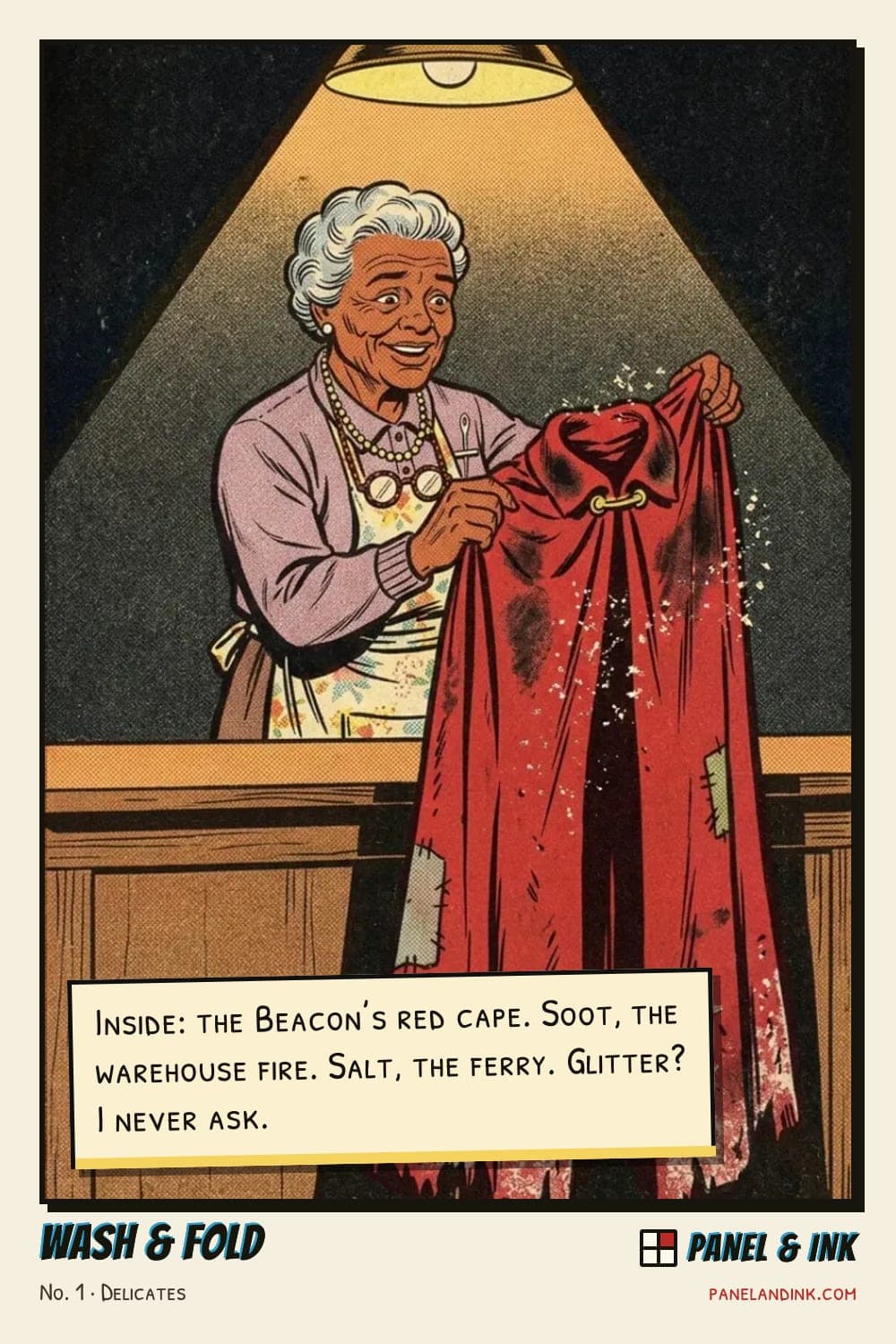
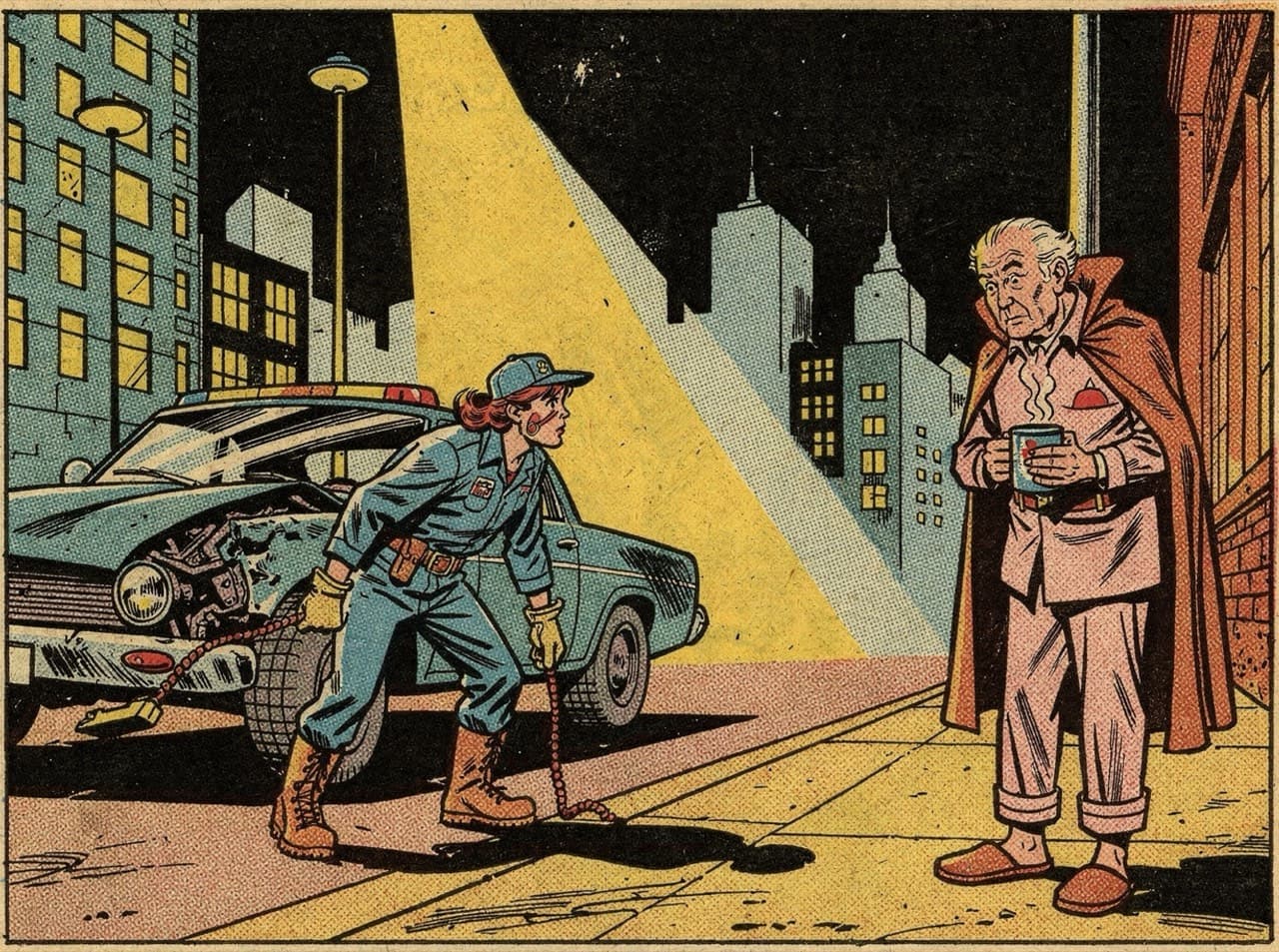
Our own comic, Wash & Fold, has three issues. Each opens on a day already gone wrong, and none opens on the thing that went wrong.
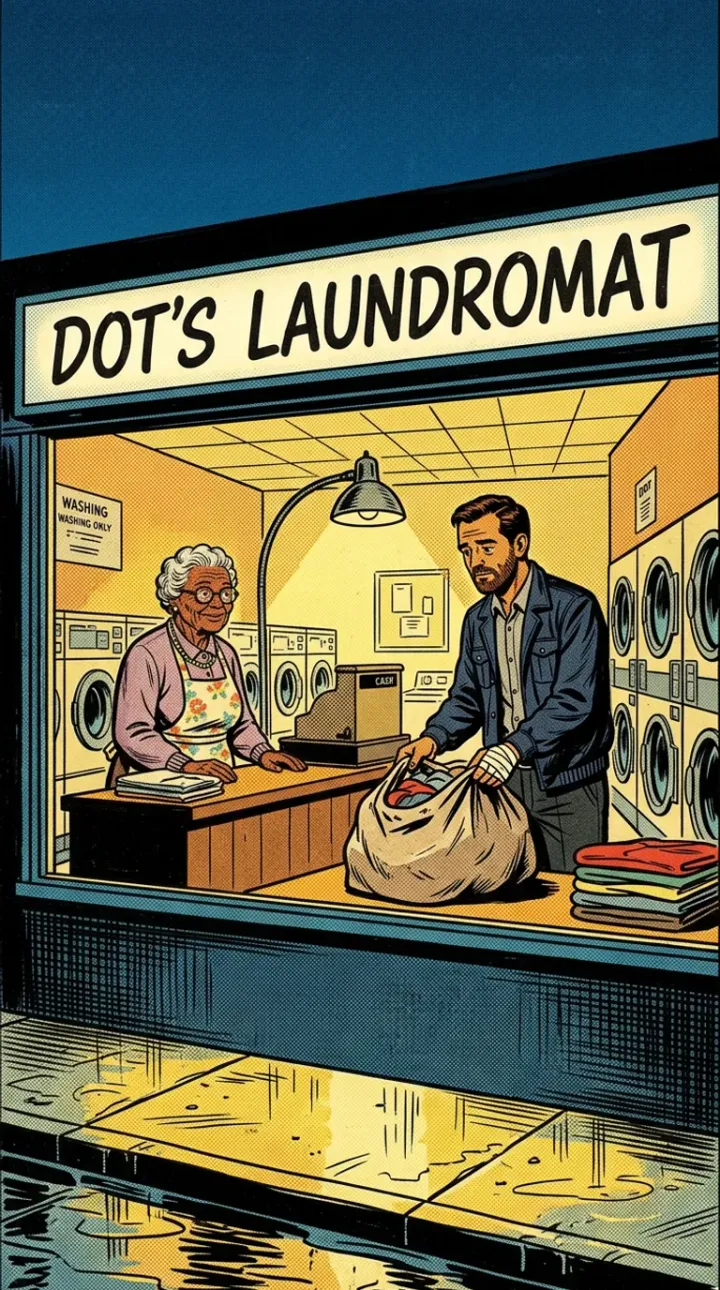
- Issue 1. 3 a.m., an all-night laundromat, a bus driver setting down a bag with his knuckles bandaged. The caption names the place and the hour. Nobody says why his hands are hurt.
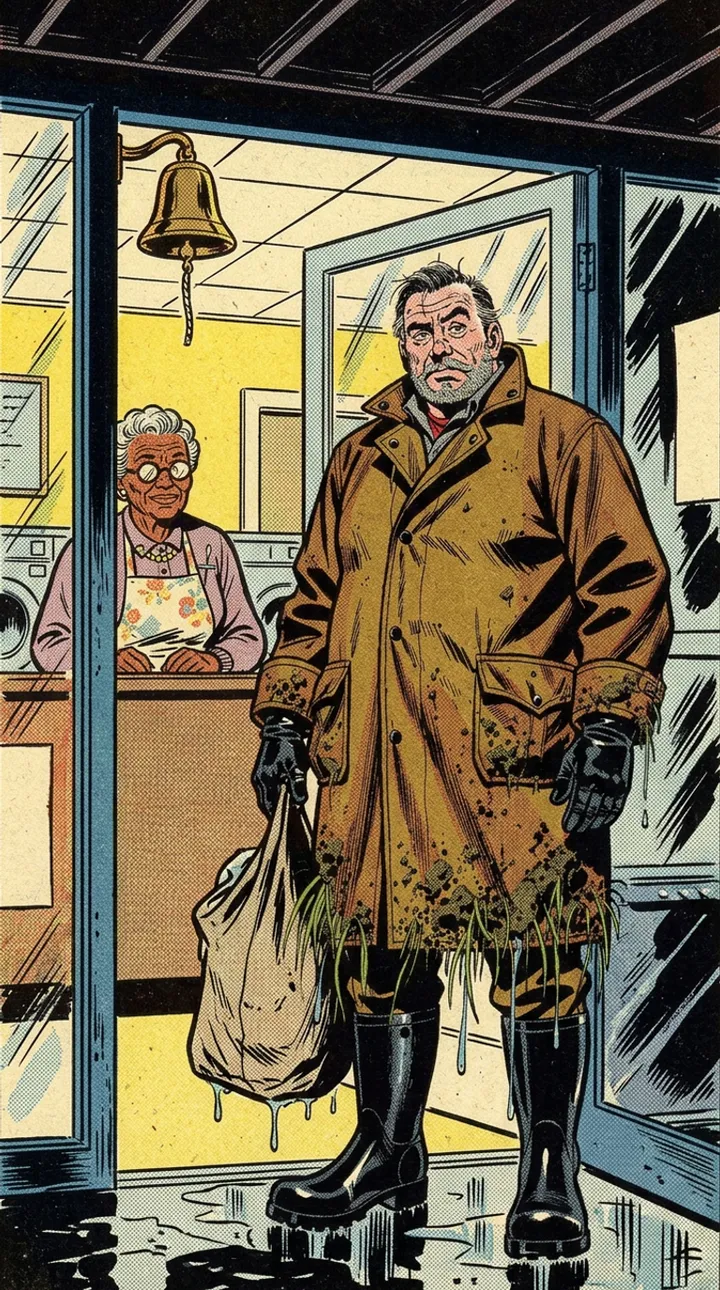
- Issue 2. The same doorway, the same hour, but it isn't the bus driver. A stranger in a dripping oilskin is holding the bus driver's bag. The trouble is that the wrong man has it.
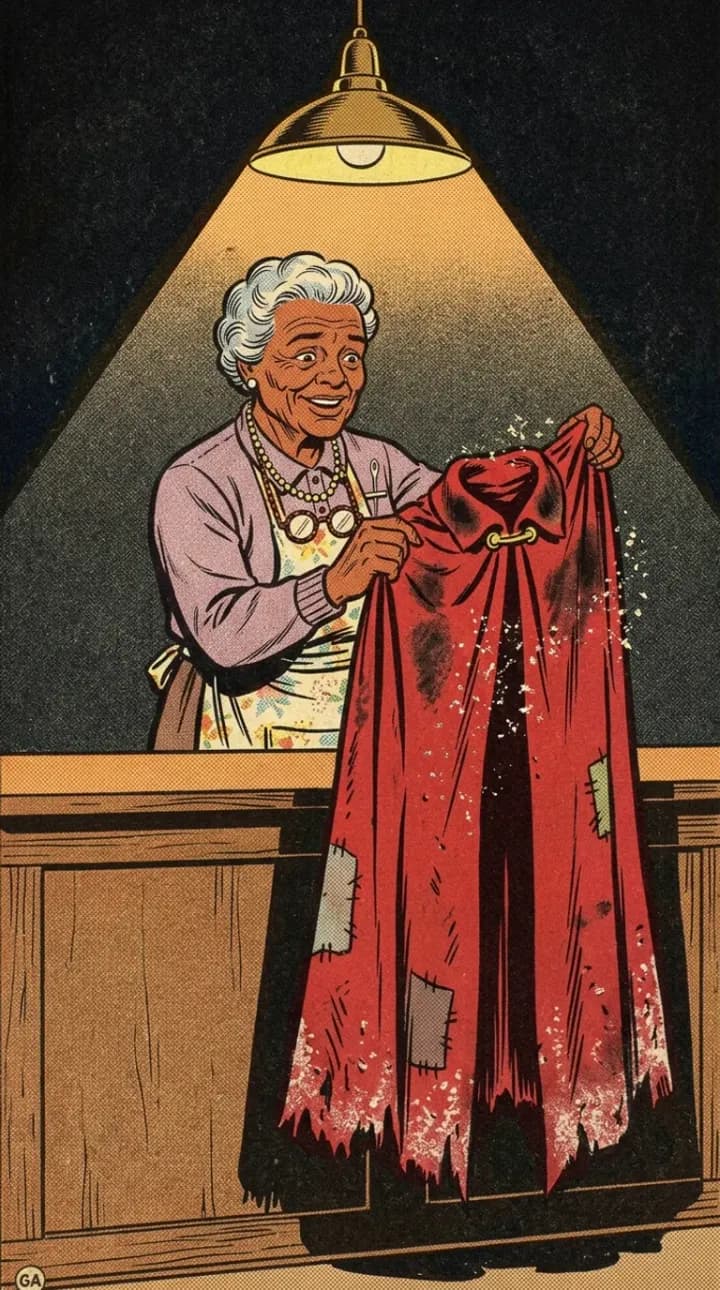
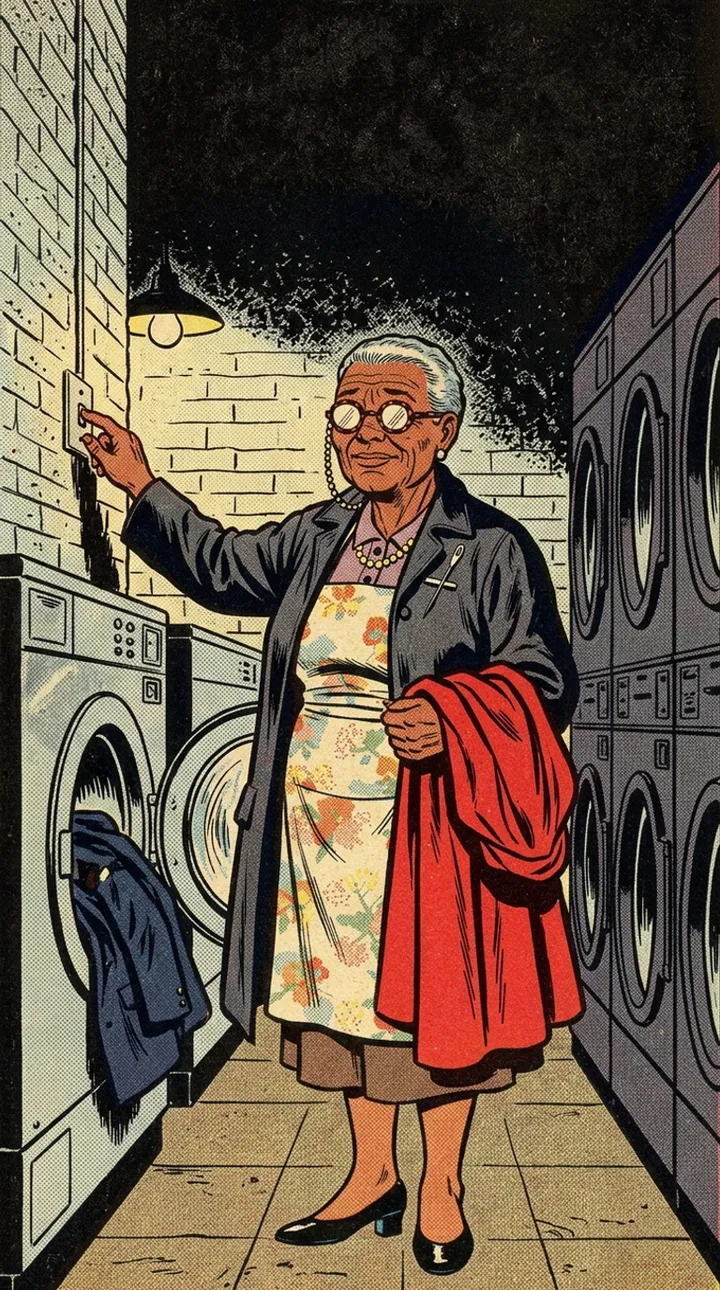
- Issue 3. Dot switching off the lights over the dryers with a red cape under her arm. The caption says she has never closed early before. Tonight she is.
None of these is an explosion. Each is a small, specific wrongness a regular would notice: the wrong hands, the wrong man, the lights off at the wrong time. How issue 1 was made walks through it, hook to cliffhanger.
What the first caption has to carry
A narrated comic has no speech balloons, so the first caption is the reader's whole way in. Three jobs, in the eighteen words a caption gets:
- Name who we're with. A name, not "she". The studio's cold read, five listeners who hear only the captions, couldn't place the narrator of our first script until the first caption said Dot's Laundromat.
- Fix the time and place. 3 a.m. and a laundromat tell the reader more than a paragraph of backstory.
- Point at the wrong thing. Bandaged knuckles. The bag in the wrong hand. The lights going off.
What it must not do is explain. "Dot had run the laundromat for thirty years, ever since..." is the second panel's job at the earliest, and probably nobody's. Comic lettering basics covers how many words a panel really holds.
Don't open on the worst moment either
The other way to get this wrong is to start at the top of the cliff. If the first panel is the bridge collapsing, the second has nowhere to go but down. Something has to change in every panel, and the writer is told exactly that: new information, a shifted relationship, raised stakes. A story that opens at full volume has spent its biggest change before anyone is listening.
So the first panel is the day going wrong, not the day ruined. The bus driver's hands are bandaged; the bridge waits until panel 4. The stranger has the bag; what's in it waits too.
Try it on a premise
Pick any idea and write its first panel as the day already going wrong. The mystery and noir ideas have a lighthouse keeper whose logbook writes itself: the first panel is the entry already there when he opens the book, in a hand that isn't his. The fantasy ideas have a seventy-three-year-old knight with a bad knee: the first panel is the summons arriving, and him reading it sitting down. The cosy and slice-of-life ideas have a night-market chef whose dish makes you remember: the first panel is a customer standing up mid-mouthful.
For the premise itself, comic strip ideas for beginners has twelve to borrow.
How the studio handles your first panel
Hand the studio a premise and the writer drafts six to eight panels, settling the number from the story, the first written to open on the trouble. You read the script before anything is drawn: every caption and picture description on the storyboard beside the hook and the cliffhanger, all of it free to change.
If you already know your first panel, say so. A brief that numbers its panels and says to use its captions word for word is kept to that count and those captions, so the opening you wrote is the opening you get. How to write a comic script shows the format on a real first page.
For a series, the first panel is also the thing that comes back. Every Wash & Fold issue can open on the bag coming through the door, with a new reason it came in the state it did. How to start a webcomic is about choosing that thing; how long is a comic issue is about what comes after panel one.
What it costs
An issue on a standard look runs about 20 credits. A new account starts with 35 credits, enough for your first issue on a standard look, and they last 14 days. The script, the storyboard and the cold read all come before a panel is drawn, so a first panel that opens wrong costs a caption, not a credit.
Make your first issue: open on the day already going wrong, and let the reader ask why.