Halftone, ligne claire, manga, gouache: people use these words as if everyone knows what they mean. Each one is a way of printing or painting a page, and each one changes how a story feels before anyone reads a word. Here is what each style is, where it comes from, and what to look for.
A fair way to compare
Every picture below is the same scene, drawn from the same words: two friends sheltering from the rain under a bus-stop roof at night, one laughing, the other holding a paper cup of coffee, a neon sign glowing behind them. Panel & Ink drew it once in every look on the looks wall, so the scene and the moment never change. Only the style does.
That's what makes the comparison honest. You're looking at the style, not at a better picture.
Halftone: the dots of cheap newsprint
Halftone began as a printing trick. Comics were printed on cheap paper with a few inks, so a pale pink or a sky blue was printed as a pattern of tiny coloured dots, and from arm's length the eye blended them into a shade. In the American superhero books of the 1950s and 60s, the dots became part of the look. Bold black ink, bright primary colours, and faces and skies made of dot texture.
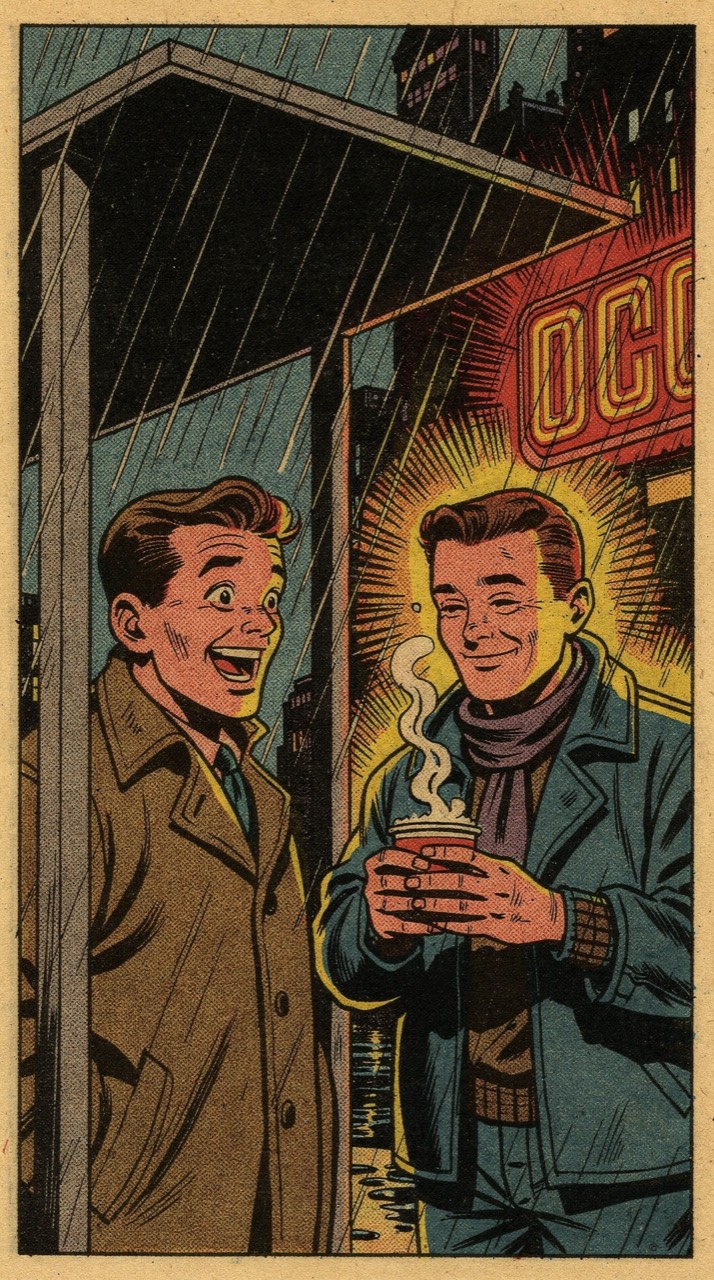
Look for: the yellowed paper, the inked shadows under the roof, and the burst of lines around the friend with the cup. On the wall it's Silver-Age Halftone, from the superhero books of 1956 to 1969. Its cousin Pop Art blows the dots up until they are the picture. Halftone suits capes, pulp adventure, and a grandparent's memory told as an old comic.
Ligne claire: one clean line around everything
Ligne claire is French for "clear line". It comes from the Brussels comics of the 1930s to the 1950s. One even, thin black outline goes around everything, a person, a brick or a raindrop, and fills it with flat colour. There's no hatching, almost no shadow, and the light seems to come from everywhere at once. Backgrounds are drawn as carefully as the people, which is why it works so well for adventures and mysteries: the clue is always in plain sight.
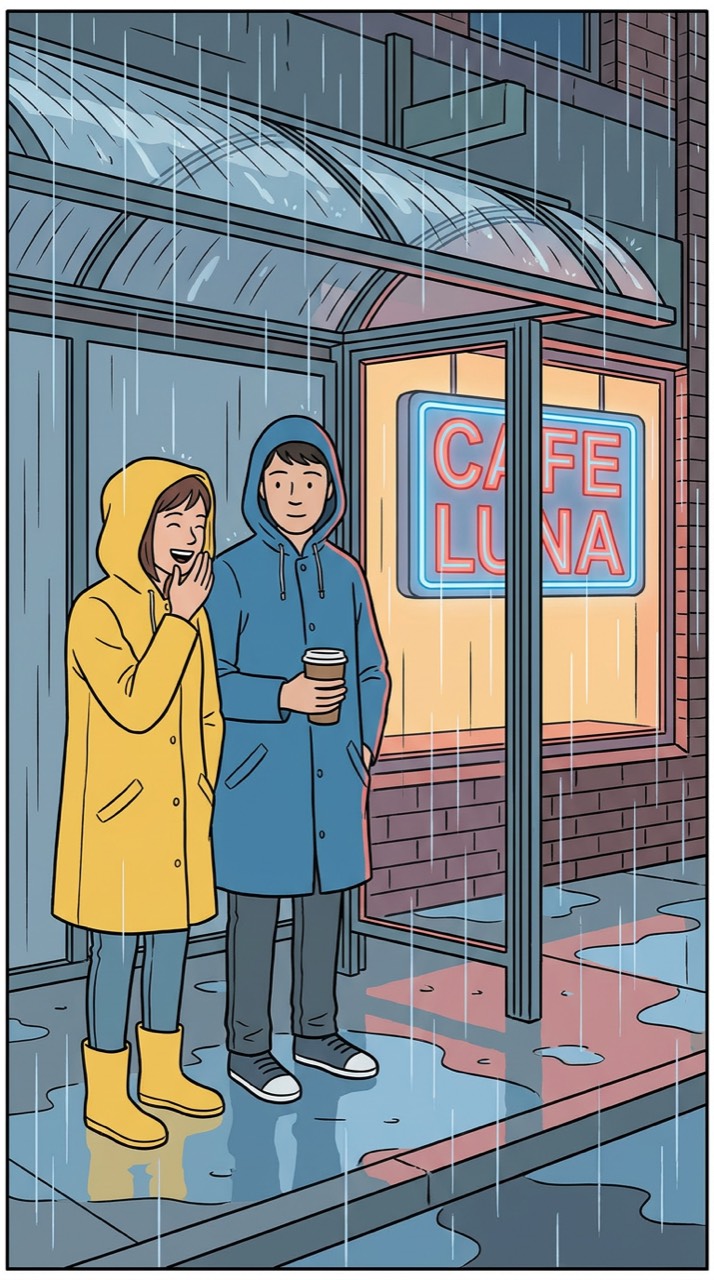
Look for: the outline is the same weight on the raincoat, the brick wall and the puddle. That's the whole style. On the wall it's Ligne Claire.
Manga: black and white, built for speed
Manga is simply the Japanese word for comics, so it covers many styles. The one most people mean comes from the thick weekly action magazines, known as shonen ("for boys", though everyone reads them). They were printed in black and white, so the style does everything with ink. A pen line swells where something hits. There are solid blacks, grey screentone (dot patterns once cut from sheets and stuck onto the page), and speed lines that make a still panel move.
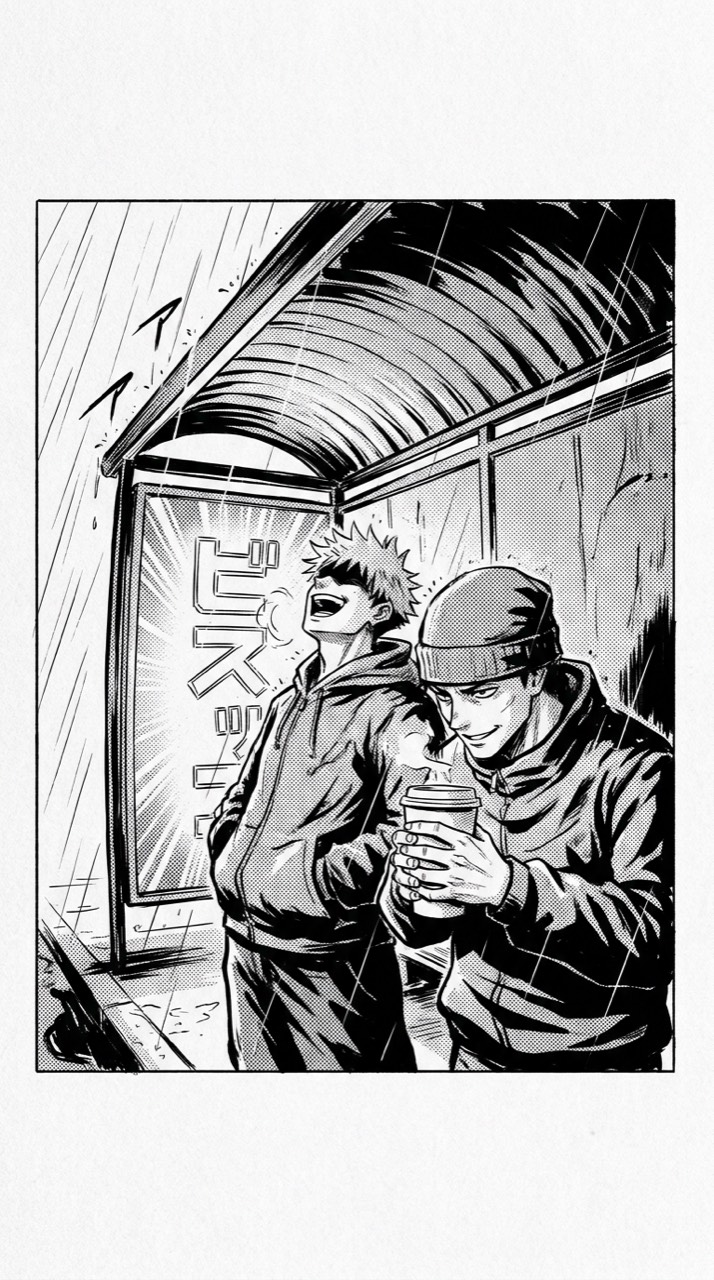
Look for: there's no colour at all, and you don't miss it. On the wall it's Shonen Ink. Manga has other moods too: Shojo Sparkle for delicate lines and big starry eyes, and Gekiga for gritty, grown-up drama in black-and-white brushwork.
Gouache: the paint of picture books
Gouache is watercolour made opaque. It has more pigment, often with chalk mixed in, so it covers whatever is underneath and dries flat and matte, with no shine. Picture-book illustrators love that soft, chalky finish, and they often work coloured pencil over the top.
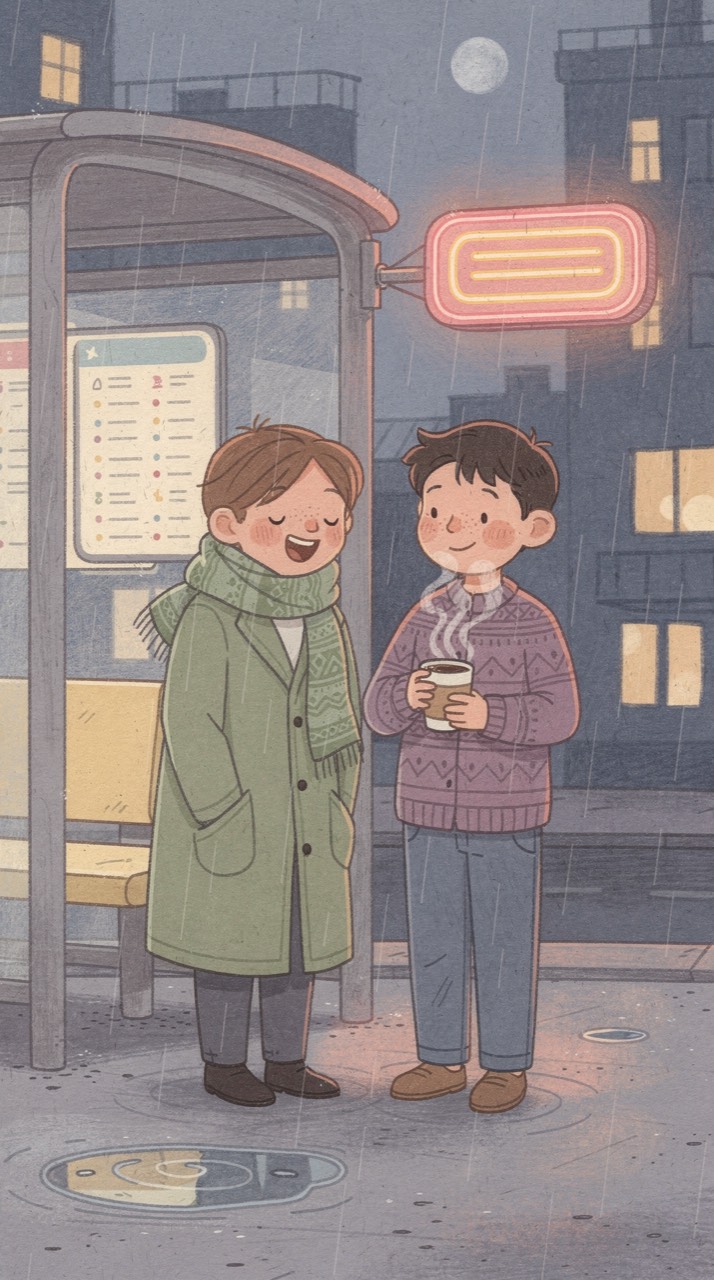
Look for: the rain is soft, the cheeks are rosy, and the night is a warm grey-blue instead of black. It's the same scene, and now it reads like a bedtime story. On the wall it's Storybook Gouache. For paint with more drama, Painted Graphic Novel works in watercolour and gouache for grown-up stories. Gouache suits a bedtime story, a child's birthday, or anything set somewhere cosy.
Which one is your comic?
Pick the style the story feels like, not the prettiest one:
- Halftone for capes, pulp and nostalgia.
- Ligne claire for adventures, and for mysteries with the clue in the background.
- Manga for action, rivals and anything that moves fast.
- Gouache for children, cosy places and gentle stories.
Ligne Claire and Shonen Ink are premium looks, so an issue in either runs about 25 credits instead of about 20. Whichever you pick, the whole comic keeps it. Every panel of every issue is drawn in that look, and each of the cast is drawn from their own model sheet.
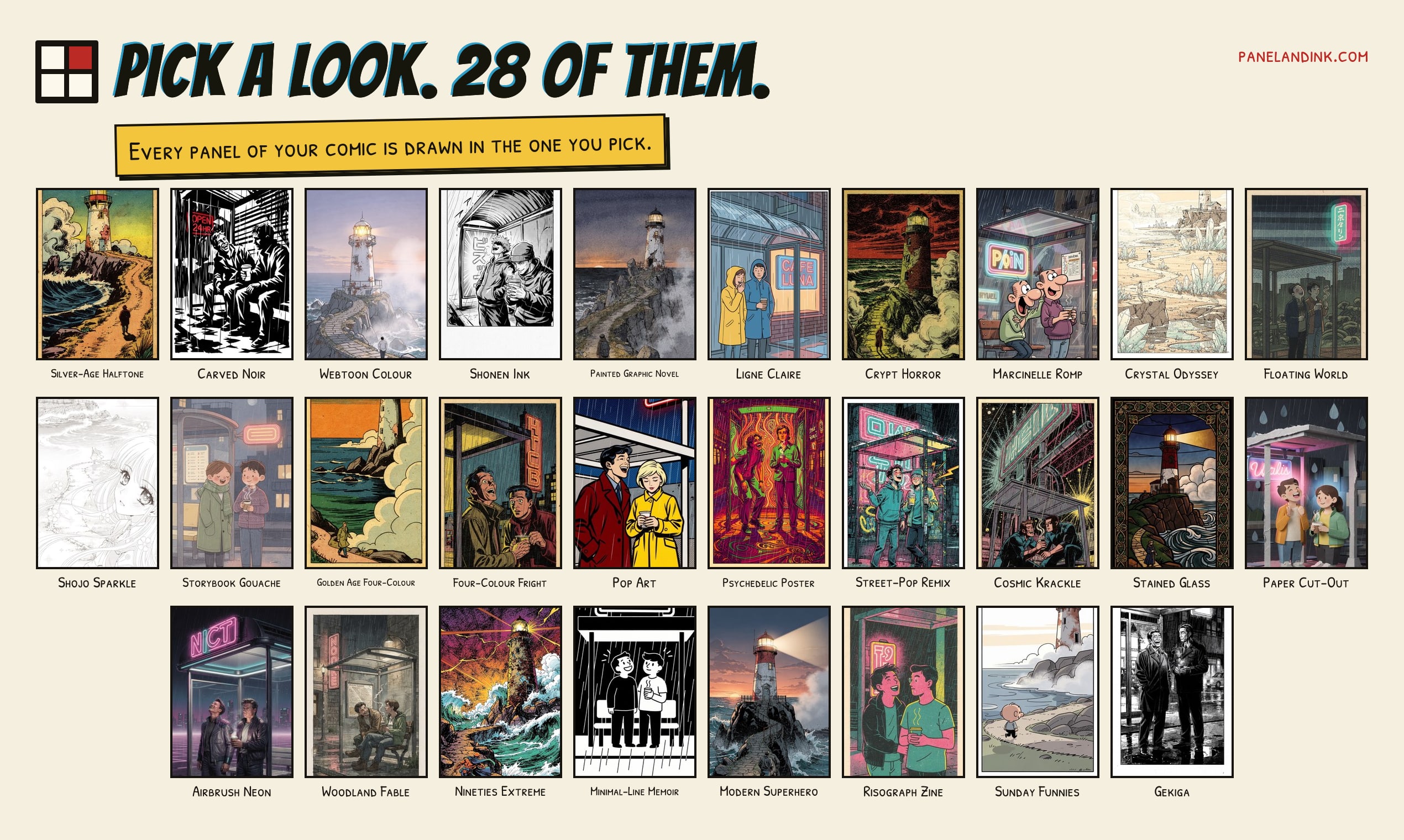
These four are only the start. There are twenty-eight looks on the wall, and every one was drawn from the same two scenes, so you can compare any pair the same way.
See all twenty-eight looks and start a comic in the one that fits. Your first issue on a standard look is covered by the 35 credits you get when you sign up.