You ask for a comic about a detective in a green coat. Panel one is perfect. In panel two she's ten years younger. By panel four the coat is blue and she has a different nose.
It's the most common complaint about AI comics, and the first thing to test before you choose a tool. Here is why it happens, what to look for, and a ten-minute test that works on any of them.
Why AI tools lose a character
A picture tool draws each panel from scratch. It doesn't remember panel one when it draws panel two. All it has is your words, and "a woman with silver hair and glasses" describes thousands of different women. Each panel gets a new one.
A character only stays the same when the tool carries something from panel to panel on purpose.
Three things to look for
- A cast you set once. You should describe a character one time, in one place, and never type it again.
- A picture each panel is drawn from. Words drift. A tool that holds a face keeps one drawing of the character and draws every panel from it.
- The details that must not change, in words. The picture holds the face. The coat, the scar and the glasses on a chain hold better when they're also written into every panel's directions.
One more: a tool that says what happens when it misses. None of them is right every time, so there has to be a quick way to redraw one panel.
How three tools say they do it
We haven't run these side by side. This is what each one's site says, as of November 2026.
- ComicInk calls it Character Lock: "Define a hero once. Their face, scar and jacket stay locked across every page and issue".
- Anifusion offers to "turn a character description into a six-view reference sheet you can review, refine, and reuse".
- LlamaGen says it "uses saved characters and reference images to help maintain character appearance and visual continuity across panels". It adds that these tools "improve consistency but cannot guarantee identical appearance". That is true of every tool here, ours included.
How Panel & Ink does it
Panel & Ink is an AI comic studio built around a series. Every comic has a Cast tab, with a card for each regular. The tab's own line gives the order:
- Add a photo, or don't. It's optional. The studio writes the character's description, from the photo if you gave one. You can edit every word.
- Draw 3 takes. Three drawings of the character in your comic's look. If none is right, type a direction for the next three, like "older" or "hat brim lower".
- Pick the one to use. The card marks it "in use", and every panel with that character is drawn from it.
The description does the other half. It goes into the drawing directions of every panel the character is in, and it names one outfit, so "sweaters" doesn't turn into five different sweaters.
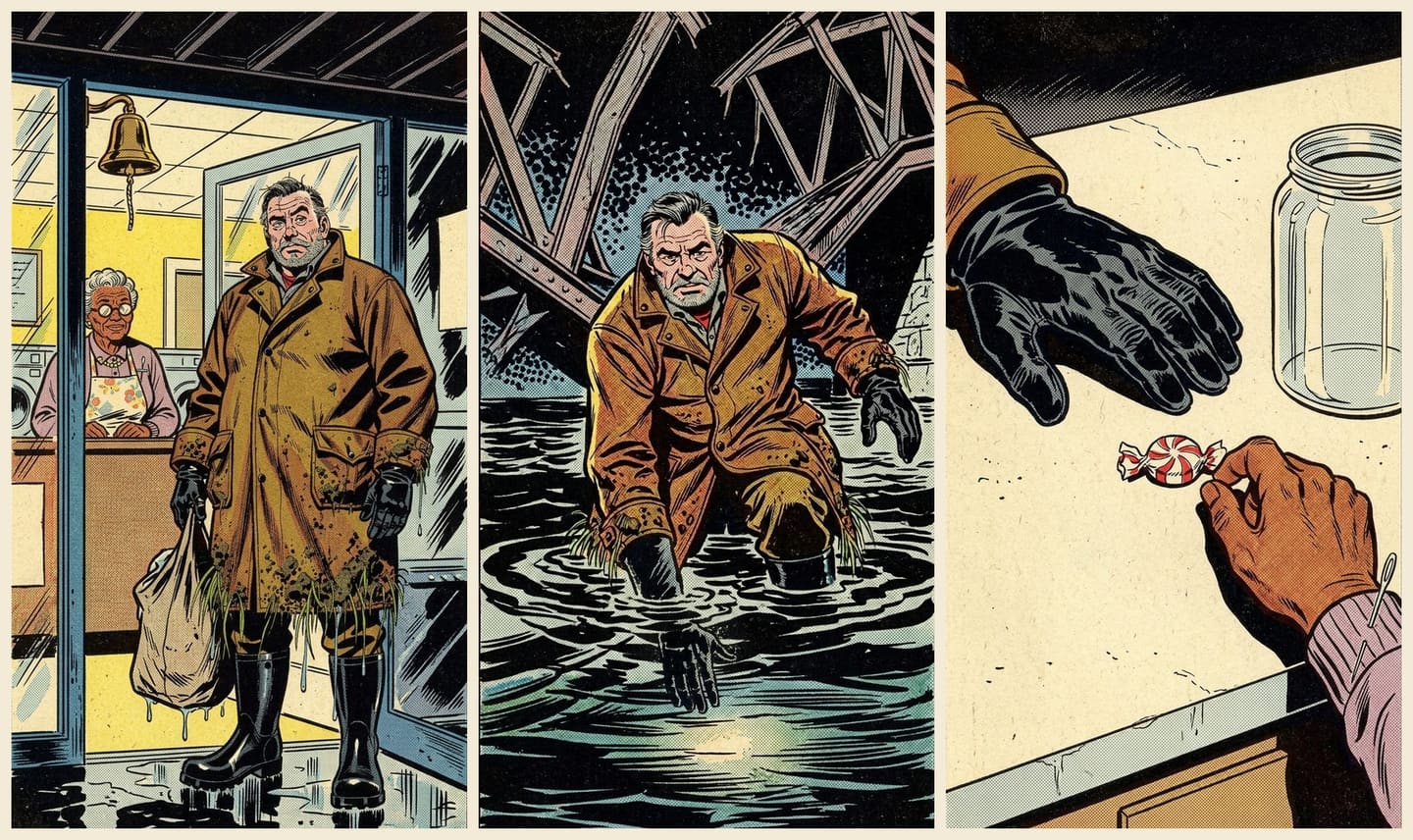
Our own comic, Wash & Fold, shows the result. Silt is a river man in a muddy oilskin and black rubber gloves. Here he is twice in issue 2:
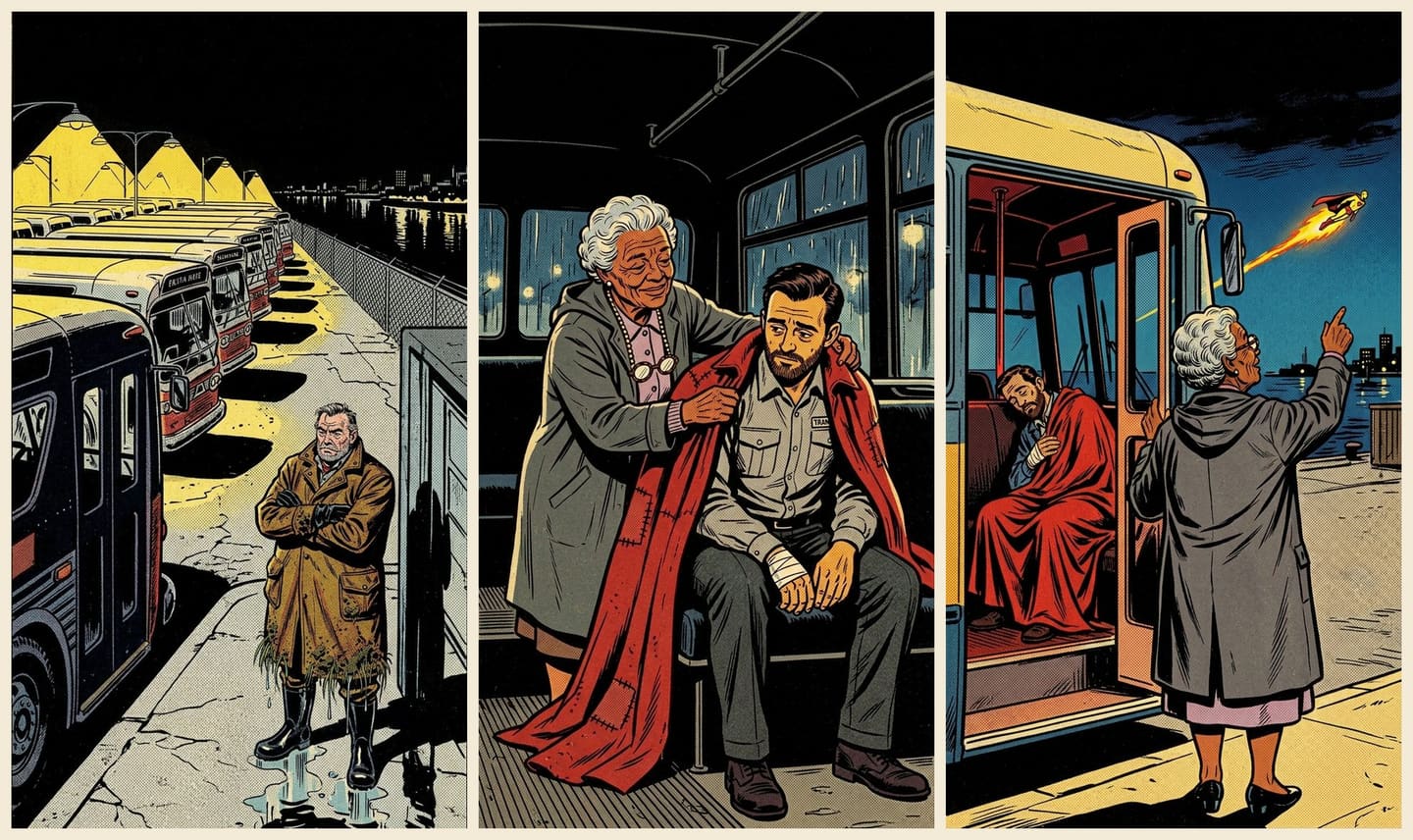
And in issue 3, small and far away at the bus depot. Same coat, same gloves, same boots:
Three more things the Cast tab does:
- Change your mind. Pick a different take later, and the panels drawn after that follow it.
- Change the look. The tab tells you who was drawn in an older look, and one press redraws them.
- Draw a model sheet. The same character from the front, three-quarters, side and back.
How to keep a character looking the same in every panel is the craft side of this: which details to pick, and what is allowed to change.
What it doesn't do
It doesn't promise a perfect match. A panel can still miss: glasses on the face that should hang on the chain. When that happens you ask for another take of that one panel, with a note on what to fix. Once the panels are in, the studio also checks them and tells you if one dresses a character unlike the rest.
Only the cast get a picture that panels are drawn from. A place or a prop that keeps coming back is held by its written description.
A ten-minute test for any tool
Use the free start most tools offer, and make one character with three details: a shape, a colour and a mark. Then ask for four panels.
- A close-up of their face.
- The same person far away, full figure.
- The same person in different weather.
- The same person next to someone else.
Now count the three details in each panel. Panel four is the hard one: it's where two characters most often blend into each other. If the details hold in all four, the tool can carry a series.
Where it matters most
Any comic where the same face comes back: a webcomic in issue twenty, a birthday comic about one kid, a comic about your dog or cat.
Pick a look from the looks wall first, because the cast is drawn in it. The ideas pages have premises by genre.
What it costs
An issue on a standard look runs about 20 credits. A new account starts with 35 credits, enough for your first issue on a standard look, and they last 14 days.
Make your first issue: set the cast once, and meet them again in every panel.

